



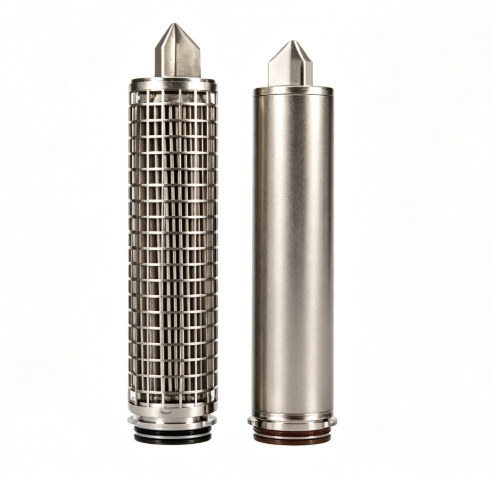
Why Choose Capsule Filters for Small-Batch Filtration?
As pharmaceutical, food and beverage, laboratory and pilot‑scale production become more flexible, filtration systems are facing a practical challenge: not every process requires a large stainless steel filter housing and a reusable filter cartridge.
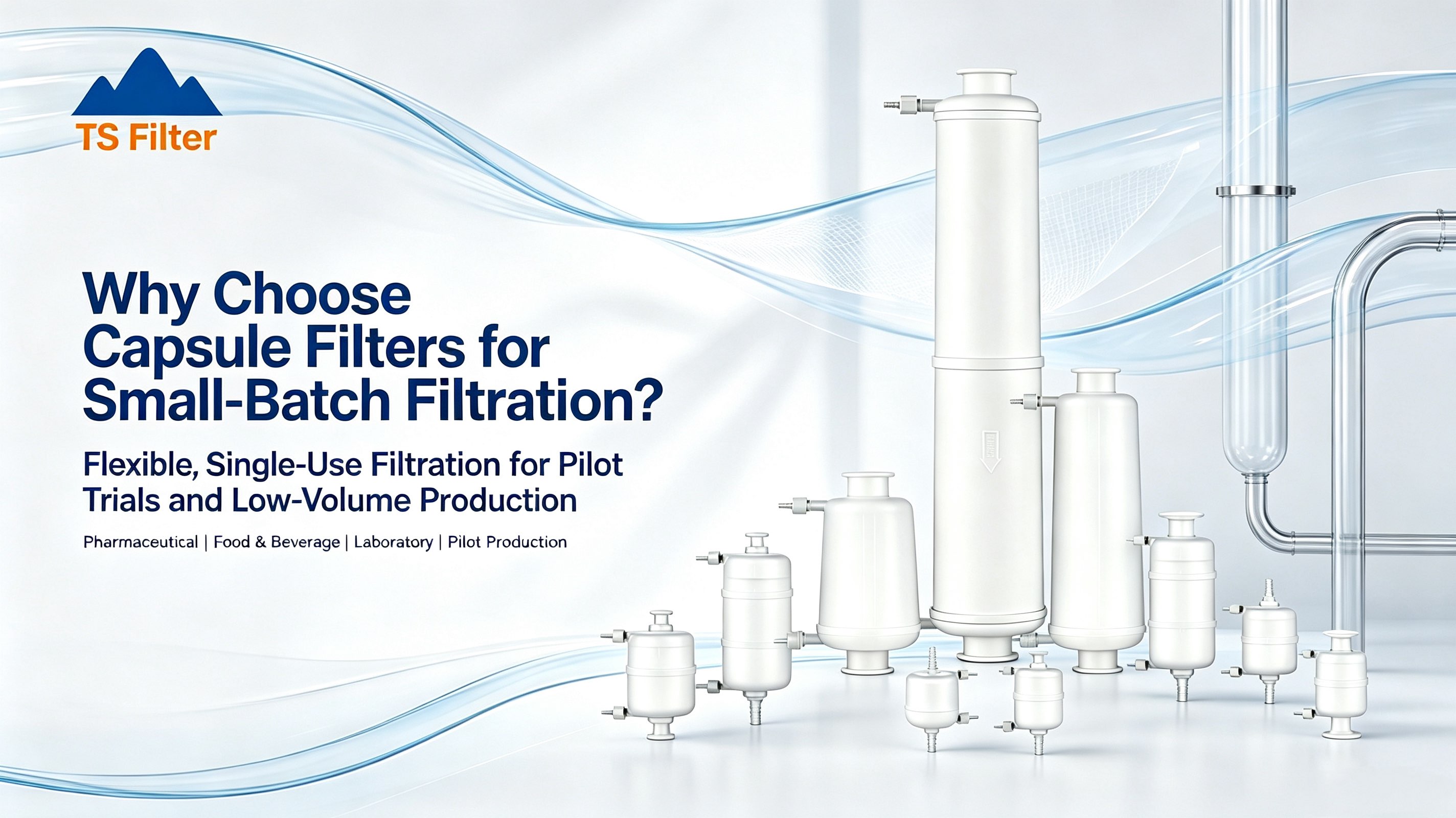
For small‑volume production, trial batches and temporary filtration points, single‑use capsule filters offer a simpler alternative. With the filter media and housing integrated into one compact unit, capsule filters can be installed and replaced quickly without the cleaning and validation work associated with conventional filter systems.
Design for Flexible Filtration
Capsule filters are available in different sizes and configurations to accommodate a wide range of flow rates and applications.
- Compact versions suit low‑volume filtration scenarios, while larger‑size capsules deliver greater filter area for higher flow demands.
- Multiple connection options enable easy integration into existing process pipelines, laboratory set‑ups and small‑scale filtration units.
- The miniaturized structure fits applications with limited installation space.
Core Benefits of Single‑Use Capsule Filters
| Advantage | Description |
|---|---|
| Ready‑to‑use | Directly connect to process lines without separate housing assembly |
| Fast changeover | Replacement only takes minutes, reducing downtime between batches |
| Minimized cross‑contamination risk | A brand‑new filter is applied for each batch to avoid risks from incomplete cleaning |
| No housing maintenance | Cleaning, sterilization and routine care for stainless‑steel housings are eliminated |
| Compact footprint | Small dimension for laboratories, pilot plants and temporary filtration points |
| Low maintenance cost | No extra gaskets, spare parts or accessories for regular servicing |
For high‑value products with relatively low filtration volume, these merits greatly improve overall process efficiency.
Application Case: Ideal for Food & Beverage Trials
Single‑use capsule filters work perfectly for small‑batch food and beverage trial production.
During new product development, manufacturers usually carry out repeated trial runs before mass production.
- Traditional filtration system: Each trial involves equipment cleaning, filter replacement and pre‑treatment, extending lead time and raising cross‑contamination risks.
- Single‑use capsule filter: Discard the spent filter after filtration and fit a new unit for the next batch.
From the provided application data, switching to food‑grade capsule filters simplified the workflow and cut trial costs by approximately 40%, accelerating new product validation.
Capsule Filters vs. Conventional Cartridge Systems
| Comparison Item | Capsule Filter | Conventional Cartridge System |
|---|---|---|
| Structure Design | Integrated filter media and housing | Separate cartridge and independent housing |
| Operation Mode | Single‑use | Reusable system |
| Installation | Quick connection | Cartridge loading plus housing preparation |
| Cleaning Requirement | Housing cleaning is not required | Housing cleaning and sterilization are necessary |
| Cross‑Contamination Risk | Lowest via single‑use design | Depends on cleaning performance and validation |
| Typical Application | Small batches, pilot trials, temporary filtration | Continuous large‑volume production |
| Maintenance Workload | Minimal | Regular maintenance for housing and accessories |
Selection Guide: Conventional cartridge systems are preferred for continuous high‑flow production. Capsule filters serve as a more efficient and flexible solution for low‑volume, multi‑point or short‑term filtration.
Key Selection Criteria
Filter selection should not be determined merely by the smallest available pore size. The filter material must be chemically compatible with process liquid, operating temperature and chemical conditions.
Critical factors for evaluation:
✅ Compatibility between filter membrane/media and process fluid
✅ Required filtration rating
✅ Flow rate and effective filtration area
✅ Connection type and tubing dimension
✅ Operating pressure and temperature
✅ Sterilization requirements
✅ Regulatory compliance for food, pharmaceutical or other industries
Note: An overly fine filter will reduce flow capacity and increase pressure drop. The filtration grade shall be selected based on actual particle removal or microbial control targets.
Trend toward Flexible Filtration
More manufacturers adopt small‑batch runs, pilot processes and flexible manufacturing, which puts forward higher requirements for easy‑to‑install, quick‑replace and low‑maintenance filtration equipment.
Single‑use capsule filters meet this market demand. Their compact integrated design and fast‑change features make them well‑suited for food and beverage trials, pharmaceutical manufacturing, laboratory testing and other low‑volume filtration applications.
For factories aiming to cut cleaning procedures, shorten filter‑change time and simplify small‑batch workflows, capsule filtration has become a practical and competitive option.