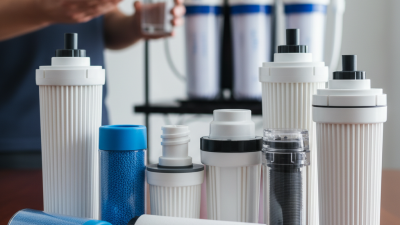
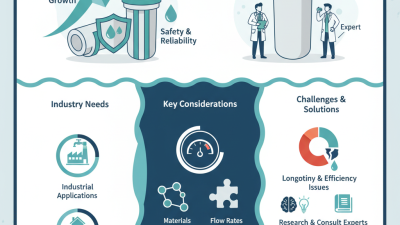
Hey there! You might have come across filter cartridges before—they’re those replaceable parts that catch particles or cut down on certain contaminants as water, air, or process fluids flow through them. Their importance has been steadily growing, mostly because keeping fluids clean actually makes a big difference: it helps protect your equipment, ensures better product quality, and even improves water treatment efforts. Did you know that, back in 2022, the WHO and UNICEF Joint Monitoring Programme reported that a staggering 2.2 billion people still didn’t have reliable access to safe drinking water? That’s a huge service gap, and while it doesn’t directly translate to cartridge demand, it really highlights why proper water treatment is so crucial.
Now, what’s inside a cartridge really depends on its media and how it’s built. Some use pleated membranes that trap particles at specific sizes, while others rely on depth media—thicker, more porous structures—to capture material. Activated carbon is pretty common too; it can reduce tastes, odors, or certain chemicals, depending on the product and testing conditions. Sometimes, systems even combine these filtering methods for better results. Keep in mind, small details matter—a cartridge might look totally clean on the outside, but could be almost at the end of its capacity inside. Plus, just knowing a micron rating doesn’t guarantee that it removes every kind of contaminant. That’s why it’s important to look for certification—like NSF/ANSI standards 42 and 53—which specify performance benchmarks for different claims. Always double-check that the particular model you’re using has the right certification for your needs.
Market trend reports, like those from Grand View Research, show that demand for water filtration is growing across the board. But remember, just because a product is popular doesn’t mean it performs well in real life. To really know, you need solid evidence that the cartridge works, proper installation, and regular replacement. It’s not always neat and straightforward—things can get a bit messy! This guide is here to help you understand what filter cartridges are, how water or fluid moves through them, and what those ratings actually mean (and don’t mean). Hopefully, it’ll make choosing and using them a little easier for you.
Filter Cartridges: Media, Core, End Caps, and Seals
What Are Filter Cartridges and How Do They Work?
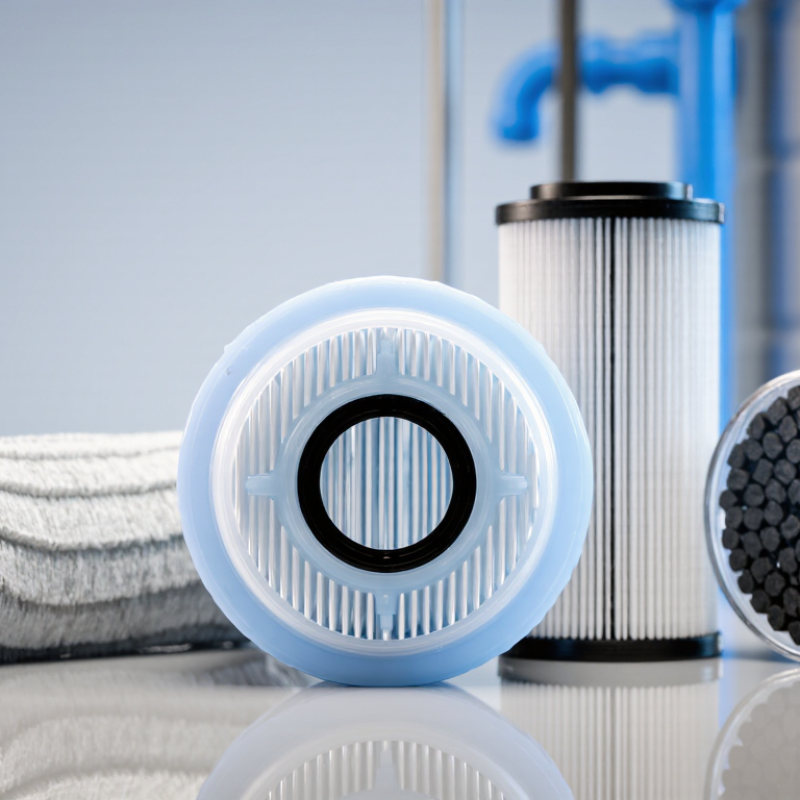
A filter cartridge is a compact assembly, not just a roll of filtering material. Its media captures particles through a surface or depth structure; the choice affects dirt-holding capacity and pressure drop. A central core supports the media against flow pressure. End caps hold the layers in place and connect the cartridge to its housing. Seals close the gaps at the ends. Small parts matter. A damaged seal can let fluid bypass the media, even when the cartridge looks clean.
ISO 16889 describes a multipass method for evaluating hydraulic filter performance using particle counts and a beta ratio. Under that method, a beta ratio of 200 corresponds to 99.5% particle removal at the specified particle size: (200−1)/200. That figure is test-condition-specific, not a promise of identical performance in every system. Fluid viscosity, flow rate, installation, and contaminant load can change operating results. A cartridge can appear sound and still perform poorly; checking differential pressure and seal condition helps catch problems.
Tips: Match the media rating to the target particle size, then verify the core and end-cap materials suit the fluid and temperature. Lubricate seals only with a compatible fluid, and seat them evenly. It’s easy to overlook. Record the cartridge’s initial pressure drop so later changes have a useful baseline.
How Flow Paths Capture Particles by Screening, Interception, and Adsorption
A filter cartridge guides liquid through a porous layer, where particles meet several capture mechanisms. Screening blocks particles larger than the media’s openings, much like a fine sieve. A cartridge may have layered or winding passages, so its effective path is not always obvious from the outside. Small differences in pore structure can change how quickly particles collect and how much pressure is needed to maintain flow.
Interception occurs when particles follow the moving fluid but brush against fibers or pore walls. Adsorption works differently: dissolved substances may cling to the media’s surface through chemical attraction. These mechanisms can operate together. A cloudy sample, for example, may lose visible grit through screening while finer material is caught deeper inside. Junior Filter Cartridges should be selected for the fluid, target particles, and required flow—not just a stated micron rating. Check pressure drop and replace the element according to its service conditions. One detail is easy to miss: capture performance can shift as the cartridge loads with material. The flow path is dynamic, not perfectly predictable.
Surface and Depth Filtration: Cartridge Ratings Commonly Span 0.2–100 µm
Filter cartridges remove particles as liquid passes through porous media. Their ratings commonly span 0.2–100 µm, but a number alone does not tell the whole story. A 0.2 µm rating targets finer particles than a 25 µm rating; it does not automatically guarantee sterile liquid. Check whether the rating is nominal or absolute, and which test method supports it. Details matter.
Surface-filtration cartridges retain particles mainly on the media’s upstream face, much like a sieve. They can suit applications where contaminants are relatively uniform and loading is predictable. Depth cartridges trap particles within thicker, layered media, often allowing more mixed-size particles to collect before flow becomes restricted. In practice, a cartridge exposed to rusty flakes and fine silt may behave differently from one handling clean process water. Flow rate, pressure drop, fluid chemistry, and particle shape also affect service life. No rating works alone.
For small-volume sample preparation, Syringe Filter Cartridges use a compact membrane, often selected by pore rating and material compatibility. A cloudy sample can clog a fine membrane quickly, even when its stated rating seems appropriate. Watch the pressure rise. Choose filtration based on the downstream requirement, not simply the smallest number on a data sheet. Ratings can be misunderstood, even by experienced operators, so verify performance with reliable documentation.
What Are Filter Cartridges and How Do They Work? - Surface and Depth Filtration: Cartridge Ratings Commonly Span 0.2–100 µm
Filter cartridges remove suspended particles as fluid passes through a porous medium. The ranges below are typical examples, not universal specifications; actual performance depends on the media, cartridge design, test method, and operating conditions.
| Cartridge type |
Filtration approach |
Typical rated range |
How particles are retained |
Common uses |
Practical considerations |
| Pleated membrane |
Primarily surface filtration; fluid crosses a thin membrane with defined pores. |
About 0.1–10 µm, depending on membrane and application. |
Particles are retained mainly at the membrane surface or within its pore structure. |
Fine clarification, final filtration, and selected process or laboratory applications. |
Pleats provide more filtration area. A fine rating alone does not establish microbial or sterilizing performance; validation is application-specific. |
| Screen or mesh |
Surface filtration through woven or formed openings. |
Commonly about 10–100 µm or coarser. |
Particles larger than the effective openings are screened out at the surface. |
Coarse protection of pumps, valves, and downstream filters; reusable straining in suitable systems. |
Can often be cleaned, but trapped material may quickly obstruct the surface in high-solids service. |
| Melt-blown depth |
Depth filtration through a porous, usually graded-fiber structure. |
Often about 0.5–100 µm, with product-specific options. |
Particles are captured at different depths by interception, straining, and other transport effects. |
General-purpose liquid prefiltration and reduction of suspended solids. |
The depth structure can hold particles throughout the media. Loading capacity and pressure drop vary with solids and fluid conditions. |
| Wound depth |
Depth filtration through fibers wound around a support core. |
Commonly about 1–100 µm. |
A winding pattern creates flow paths that trap particles within the cartridge. |
Sediment reduction in water and other compatible liquid streams. |
Useful for particle loading across the media depth; compatibility depends on fiber, core, and fluid chemistry. |
| Resin-bonded depth |
Rigid or semi-rigid porous depth structure made from bonded fibers or particles. |
Often about 1–100 µm, depending on construction. |
Particles are retained within the tortuous internal passages of the porous structure. |
Applications needing a more rigid depth medium or compatibility with specific operating conditions. |
Confirm chemical and temperature compatibility from the cartridge specification before use. |
Understanding micron ratings: A nominal rating indicates particle retention under a stated or manufacturer-defined test, and its meaning can vary. An absolute rating is generally intended to describe a more specific retention level under defined test conditions, but definitions and methods also vary. Compare the test method and stated efficiency—not just the micron number—when selecting a cartridge.
Micron Ratings: Why “Nominal” and “Absolute” Retention Are Not Equivalent
What Are Filter Cartridges and How Do They Work?
Micron Ratings: Why “Nominal” and “Absolute” Retention Are Not Equivalent
A filter cartridge traps particles as liquid or air passes through its media. Its micron rating describes the particle size used to assess retention, but the number alone does not tell the whole story. A nominal rating usually indicates that a cartridge captures a stated proportion of particles at that size. The proportion and test method can vary. An absolute rating is often tied to a more demanding efficiency claim under specified test conditions. It does not automatically mean every particle at that size is removed.
Small numbers matter.
Two cartridges marked with the same micron rating may perform differently. Media structure, flow rate, fluid properties, and test methods all affect results. Check the product’s efficiency data and test conditions, rather than assuming “absolute” has one universal definition. For example, 40 Inch Filter Cartridges describes length, not particle-retention performance. I would not choose by the micron number alone; actual operating conditions are easy to overlook.
Tips: Check whether the rating is nominal or absolute, and ask what capture efficiency supports it. Match the cartridge to the particles and flow conditions you need to manage. If the data sheet is vague, pause and verify the details.
ISO 16889 Beta Ratios: βₓ(c) = 200 Indicates 99.5% Particle Removal
Filter cartridges remove suspended particles as fluid passes through porous media. Fibers, mesh, or layered materials capture particles through sieving, interception, and related mechanisms. As debris builds up, resistance to flow usually increases. A pressure gauge can show this change before the flow feels noticeably weak.
ISO 16889 uses a controlled multi-pass test to evaluate hydraulic filter performance. The beta ratio, βₓ(c), compares qualifying particle counts upstream and downstream.
A βₓ(c) of 200 means about 200 particles above the stated size enter for every one that passes through. That equals 99.5% removal at that particle-size threshold. A simple example: 20,000 particles upstream and roughly 100 downstream.
The “x(c)” matters. It identifies a calibrated size, not every particle in the fluid. The figure is precise, but easy to overread.
Actual performance also depends on fluid viscosity, flow rate, contaminant load, cartridge condition, and installation. A damaged seal can let fluid bypass the media. Then the rating may offer little practical protection. The test result is useful, not magic. Match the cartridge rating to system cleanliness needs, and monitor differential pressure. It is also worth asking whether the test size matches the particles that threaten a particular valve or pump.
Cartridge Performance: Flow Rate, Dirt-Holding Capacity, and Pressure Drop
A filter cartridge’s performance is not captured by one number. Flow rate describes how much liquid passes through it over time, usually at a stated pressure and with a specified fluid. A cartridge rated for a certain flow may perform differently with a colder, thicker liquid. Check the test conditions. In a workshop, a pressure gauge before and after the housing can show the pressure drop across the cartridge. As particles collect, that difference often rises, while flow may fall. The change is useful, but it is not a perfect measure of remaining life.
Dirt-holding capacity estimates how much contaminant a cartridge can retain before reaching a defined pressure limit or losing acceptable flow. It depends on particle size, contaminant shape, filter media, and the test method. Two cartridges with similar ratings may therefore last different lengths of time in real service. That can be frustrating. For a practical comparison, use the same fluid, flow rate, and replacement limit, then record pressure readings over time. A sudden increase may signal loading, though a blocked line or changing pump conditions can also affect readings. Field notes help, but they are not a substitute for the manufacturer’s test data. Even careful measurements leave some uncertainty.
Selection and Replacement: Match Cartridge Media to the Fluid and Contaminant
What Are Filter Cartridges and How Do They Work?
Choosing a filter cartridge means matching its media to both the fluid and the contaminant. A water system catching fine sediment may need a different media and rating from a process line handling oil or sticky particles. Check fluid compatibility, operating temperature, viscosity, flow rate, and allowable pressure drop. A cartridge that captures particles well can still restrict flow. High Flow Filter Cartridges may suit systems with greater flow demands, but confirm their rated capacity and housing fit before installation.
Tips: Check the fluid’s safety data and the cartridge specifications. Note the starting pressure drop. Small details matter.
Replacement timing depends on operating conditions, not just a calendar. Watch for rising differential pressure, reduced flow, or changes in the filtered fluid. Follow the equipment maker’s service guidance, and use clean handling practices when changing cartridges. Record the date and pressure readings; these notes can reveal a useful replacement pattern. Still, one system’s schedule may not transfer to another. If readings behave oddly, pause and review the installation and measurement method before assuming the cartridge has failed.
0.22-Micron Capsule Filters in Focus: Insights from Grand View Research’s Global Membrane Filtration Market Report
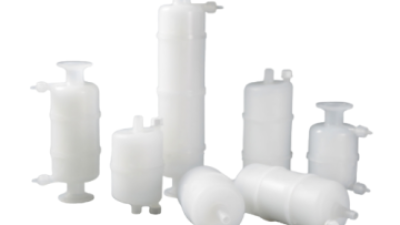
As membrane filtration moves into more applications, 0.22-micron capsule filters offer a practical format for controlled liquid and gas processing. Grand View Research estimates that the global membrane filtration market was valued at approximately USD 19.1 billion in 2023 and projects an 8.8% compound annual growth rate from 2024 to 2030. This expansion reflects rising demand for filtration across industries, including pharmaceuticals and chemicals, where consistent performance and process efficiency matter. Ready to use and disposable, capsule filters combine a polypropylene cage with a pleated membrane joined by thermal bonding, without adhesives, binders, or other chemicals.
For laboratory and pilot-scale manufacturing, these filters can support small-batch prefiltration and final filtration, as well as scale-up from trials to production. Their filter areas range from 1,200 to 4,400 cm², with designs intended for 50–500 L batches and flow rates of up to 20 L/min. A choice of membrane media and connectors—including industrial-grade fittings—allows integration into different process lines. Each unit is integrity tested before release, supporting dependable use in high-throughput operations such as bulk chemical purification and pharmaceutical intermediate processing. High capacity and durable construction can also extend service life and reduce replacement frequency.
Conclusion
Filter Cartridges are replaceable filtration elements made from media supported by a core and secured with end caps and seals. As fluid passes through, particles may be captured at the media surface by screening, within its depth by interception, or through adsorption. Cartridge designs commonly support surface or depth filtration, with ratings often ranging from 0.2 to 100 µm. These ratings require careful interpretation: a nominal rating indicates approximate retention under stated conditions, while an absolute rating represents a more stringent, test-defined level of particle capture.
Performance depends on more than the micron rating. Flow rate, dirt-holding capacity, and pressure drop all affect how a cartridge operates and when it should be replaced. In ISO 16889 multipass testing, a beta ratio of βₓ(c) = 200 corresponds to 99.5% removal of particles at the specified size. To select a suitable cartridge, match its media and retention characteristics to the fluid, contaminants, operating conditions, and required replacement interval.