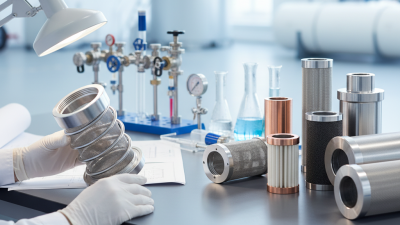
So, China has really turned into a big-time production hub for membrane separation tech. You'll find its manufacturers working across water treatment, food processing, pharma, electronics, and industrial reuse projects. If you're a global buyer looking for reliable Filter Membrane solutions, this guide rounds up ten of the leading Chinese companies to check out.
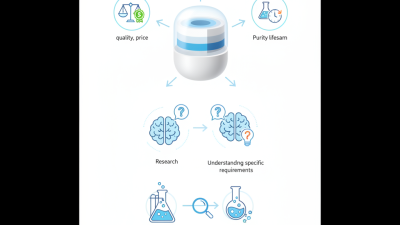
When you're choosing a company, there are a few things that really matter—like how much manufacturing experience they have, what their product range looks like, whether they can handle exports, how solid their quality systems are, and what kind of technical support they offer. Names like Vontron Technology, OriginWater, Litree, Scinor, Jiarong Technology, and Membrane Solutions all bring something different to the table. Some are mainly focused on reverse osmosis elements, while others are more into ultrafiltration, microfiltration, or membrane bioreactor systems. Sure, their products might look pretty much the same at first glance. But how well they actually perform? That comes down to things like feedwater, operating pressure, temperature, and how you clean them. The little details really do make a difference.
If you're sourcing globally, it's worth digging into test reports, material specs, production capacity, and how responsive a supplier is after the sale. Certifications? Sure, they can help build credibility—but they shouldn't replace checking things out yourself. Factory audits, pilot runs, and sample evaluations are still pretty practical safeguards. And yeah, a supplier might quote you a great price, but if batch quality keeps swinging around, that can drive up your operating costs over time. That's something worth paying attention to.
Now, the companies we talk about here aren't ranked just by size or how visible they are online. Things like market reputation, engineering know-how, past project references, and documented performance all play a role in the comparison too. And keep in mind, product availability and technical capabilities can shift over time. So before buyers sign any contracts, they should double-check current certifications, lead times, warranty terms, and compatibility. Think of this guide as a structured starting point—not a replacement for an engineering assessment tailored to your specific project.
China Top 10 Filter Membrane Manufacturers for Global Buyers
Membrane Filter selection begins with pore size, not catalogue price. Microfiltration, or MF, commonly spans 0.1–10 μm and removes suspended solids, algae, and many bacteria. Ultrafiltration, or UF, typically covers 0.01–0.1 μm and retains colloids, proteins, and most microorganisms. Nanofiltration, or NF, operates around 0.001–0.01 μm, helping reduce hardness, color, and selected organic compounds.
The ranges look neat on paper. Reality is less tidy. A 2023 market report from Grand View Research valued the global membrane filtration market at more than USD 8 billion. Its analysis also identifies water treatment as a major application. The UN World Water Development Report 2024 states that agriculture uses roughly 70% of global freshwater withdrawals. This pressure makes recovery rate, cleaning demand, and energy use practical buying criteria for Chinese manufacturers.
For global buyers, compare verified flux, salt rejection, pressure limits, and membrane material. Ask for pilot-test records using water similar to your own. A bright laboratory sample can hide rapid fouling. Pretreatment matters greatly. Turbidity, oil, iron, and microbial growth may shorten service life. ISO 9001 certification supports process control, but it does not prove field performance. Independent testing remains valuable, especially for NF systems with changing feed chemistry. The best supplier is not always the lowest bidder. Sometimes, the missing data matters more than the quoted capacity.
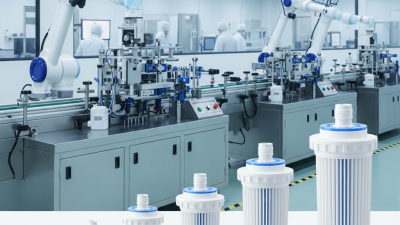
China’s top 10 filter membrane manufacturers should be ranked through verifiable operational evidence. Capacity matters, but installed machinery alone can mislead. Buyers should compare monthly output, cleanroom area, production lines, and delivery records. For Pp Filter Membrane products, useful checks include pore-size consistency, material traceability, and batch rejection rates.
Export reach adds another practical measure. Review shipment destinations, distributor coverage, export duration, and response times for technical documents. Patent counts can show research activity, yet patents do not automatically prove stable production. ISO 9001 certification is more meaningful when supported by recent audit records, corrective-action reports, and controlled inspection procedures. A fair ranking should score these four areas separately, then publish the weighting clearly.
Tips: Ask for capacity evidence, not only catalog claims. Request sample test reports and one recent certificate. Check whether the certificate covers the actual manufacturing site. No ranking is perfect; public data may be incomplete, outdated, or selectively presented. A careful buyer should leave room for factory audits, pilot testing, and follow-up questions before approving a long-term supplier.
China’s filtration sector serves municipal, industrial, food, and pharmaceutical water projects. Global buyers often compare manufacturers by application, not catalog size. Microfiltration removes suspended solids and bacteria from relatively clear streams. Ultrafiltration targets colloids, proteins, and larger organic molecules. These systems commonly use hollow-fiber or flat-sheet designs.
Nanofiltration provides selective removal of hardness, color, and some dissolved organics. Reverse osmosis handles desalination and high-purity water production. MBR systems combine biological treatment with membrane separation, producing compact plants and stable effluent quality. A Pes Filter Membrane may suit demanding chemical conditions, but compatibility testing remains necessary. Temperature, pH, pressure, and cleaning chemicals can change membrane life.
Look beyond price.
Experienced buyers request pilot data, flux results, salt rejection, and cleaning records. They also check pore-size claims through independent testing. Factory audits should review casting lines, module assembly, batch traceability, and pressure testing.
Field performance can differ from laboratory figures. That gap needs honest discussion. Ask for references from similar wastewater, seawater, or process-water projects. Examine operating energy, replacement intervals, and after-sales response. A supplier with clear technical documentation is usually easier to manage across borders. Mistakes still happen, especially when pretreatment is underestimated. A reliable manufacturer explains those risks before shipment.
For global buyers, flux is only useful when measured under identical conditions. Ultrafiltration membranes commonly operate around 30–100 L/m²·h, while microfiltration can exceed 100 L/m²·h. These figures vary with temperature, solids, and viscosity. The US EPA Membrane Filtration Guidance Manual reports strong microbial removal when validated systems maintain stable operation. Rejection rate, however, is not the same as removal credit. A membrane may reject bacteria efficiently but allow dissolved salts to pass.
TMP often sits near 0.1–2.0 bar for submerged or pressurized MF and UF systems. Rising TMP is an early warning sign. It usually indicates fouling, poor pretreatment, or incorrect cleaning intervals. AWWA M53 guidance emphasizes monitoring normalized permeability, not flux alone. In field testing, a 15–20% permeability decline deserves investigation.
Membrane lifetime is commonly estimated at five to ten years, but aggressive oxidants, abrasion, and repeated chemical cleaning can shorten it. That estimate feels optimistic in dusty plants. An Air Filter Membrane also needs separate testing for pressure drop, particle efficiency, and humidity resistance.
Tips: Request raw test conditions, including temperature, feed turbidity, pressure, and recovery. Compare rejection data at the same molecular weight or particle size. Ask for cleaning-cycle records, not only laboratory lifetime claims. I would also inspect pilot data before accepting a high-flux specification. Small pilot differences often become expensive operating problems.
China Top 10 Filter Membrane Manufacturers for Global Buyers
Certification Review: FDA, NSF/ANSI 61, ISO 9001, and EU 1935/2004
Global membrane demand is expanding with stricter water and food-contact controls. Grand View Research projects the membrane filtration market will grow at roughly 6% annually through 2030. The WHO and UNICEF Joint Monitoring Programme reported that 2.2 billion people lacked safely managed drinking water in 2022. This pressure makes certification evidence more important than factory photos or sales claims.
FDA compliance usually means materials meet relevant food-contact requirements, not that the FDA approves every membrane. EU Regulation 1935/2004 requires materials to avoid harmful migration into food. Test conditions should match temperature, contact time, and chemical exposure. NSF/ANSI 61 focuses on drinking-water system components and extraction limits. ISO 9001 confirms a quality-management system, but it does not prove membrane safety or performance. I have seen suppliers present ISO certificates as product approvals. That remains a common mistake.
Tips: Request certificates, test reports, scope pages, and issuing-body details. Check product names, factory addresses, validity dates, and applicable standards. Ask for migration results under your actual operating conditions. For the top ten candidates, compare pore size, flux, pressure limits, and traceability records beside certification files. A certificate without matching model numbers deserves caution. Some documentation may still be incomplete. That is worth questioning before sampling.
| Rank | Anonymous Manufacturer | Manufacturing Base | Membrane Product Scope | Common Buyer Application | FDA Food-Contact Review | NSF/ANSI 61 Review | ISO 9001 Review | EU 1935/2004 Review | Primary Evidence Required | Recommended Buyer Action |
|---|---|---|---|---|---|---|---|---|---|---|
| 1 | Manufacturer 01 | China | Polyamide thin-film composite membranes | Municipal and industrial reverse osmosis |
Verify declaration FDA compliance depends on the specific materials, additives, and intended use. |
Verify scope Relevant where components are intended for drinking-water contact. |
Verify certificate Check issuer, validity, site, and scope. |
Verify DoC Request a food-contact Declaration of Compliance for the finished product. |
Material declaration, migration data, accredited certificates, and batch traceability. | Confirm the exact membrane model and operating conditions covered by each document. |
| 2 | Manufacturer 02 | China | Ultrafiltration hollow-fiber membranes | Drinking-water treatment and wastewater reuse |
Verify declaration Do not treat a general product brochure as FDA evidence. |
Verify scope Certification must cover the relevant materials and end-use category. |
Verify certificate ISO 9001 is a quality-management certification, not product approval. |
Verify DoC Review applicable EU food-contact requirements and supporting test results. |
Resin and additive list, test reports, certificate copies, and quality records. | Ask for an independent laboratory report linked to the supplied membrane construction. |
| 3 | Manufacturer 03 | China | Microfiltration flat-sheet membranes | Food clarification and process-water filtration |
Verify declaration Confirm suitability for the actual food-contact application. |
Usually conditional NSF/ANSI 61 relevance depends on potable-water contact. |
Verify certificate Review the certified manufacturing location and exclusions. |
Verify DoC Check intended food type, temperature, and contact duration. |
Food-contact statement, overall and specific migration data, and certificate scope. | Compare test conditions with the buyer’s actual cleaning and process parameters. |
| 4 | Manufacturer 04 | China | Nanofiltration spiral-wound membranes | Water softening and industrial separation |
Verify declaration Review all layers, adhesives, spacers, and seals. |
Verify scope Confirm whether the complete assembly or only selected components are covered. |
Verify certificate Check certificate number and current surveillance status. |
Verify DoC Request supporting documentation for all food-contact components. |
Complete bill of materials, compliance statement, test reports, and change-control records. | Require written notification of formulation or component changes. |
| 5 | Manufacturer 05 | China | Reverse osmosis membrane elements | Commercial and industrial water purification |
Verify declaration FDA-related evidence should identify the applicable regulatory basis. |
Verify scope Confirm the tested configuration and rated service conditions. |
Verify certificate Validate the certificate directly with the issuing body where possible. |
Verify DoC Ensure the declaration covers the finished membrane element. |
Product specification, third-party testing, certificate verification, and lot records. | Purchase samples for incoming inspection before approving regular supply. |
| 6 | Manufacturer 06 | China | Polyethersulfone ultrafiltration membranes | Biotechnology, pharmaceutical, and industrial filtration |
Verify declaration Assess material suitability for the stated process and contact conditions. |
Application-specific Potable-water certification may not apply to every process configuration. |
Verify certificate Confirm the scope includes the relevant production site. |
Verify DoC Review EU requirements for polymers and other contacting materials. |
Polymer identification, extractables data, quality certificate, and production controls. | Request validation data for sterilization, cleaning chemicals, and repeated use. |
| 7 | Manufacturer 07 | China | Ceramic microfiltration and ultrafiltration membranes | High-temperature and chemically demanding filtration |
Verify declaration Review glaze, binders, seals, and housing materials where applicable. |
Verify scope Certification may apply to the assembly rather than the ceramic medium alone. |
Verify certificate Confirm the quality system covers final assembly and testing. |
Verify DoC Check all non-ceramic contact materials separately. |
Material composition, heavy-metal migration data where relevant, and assembly records. | Review compatibility with the buyer’s cleaning agents and maximum temperature. |
| 8 | Manufacturer 08 | China | Membrane bioreactor flat-sheet modules | Municipal wastewater treatment and water reuse |
Usually conditional Confirm whether food-contact evidence is needed for the intended use. |
Verify scope Check potable-water applicability if treated water enters a drinking-water system. |
Verify certificate Review the certified scope for module assembly and testing. |
Usually conditional Applicability depends on intended contact with food or drinking water. |
Module drawings, materials list, quality certificate, and performance test records. | Separate wastewater-performance evidence from drinking-water compliance evidence. |
| 9 | Manufacturer 09 | China | Gas-separation and specialty polymer membranes | Biogas upgrading and industrial gas processing |
Often not applicable Confirm intended use before requesting food-contact evidence. |
Often not applicable NSF/ANSI 61 generally concerns drinking-water system components. |
Verify certificate Assess process controls, calibration, and nonconforming-product procedures. |
Often not applicable EU food-contact rules apply only where the use case falls within their scope. |
Technical datasheet, quality certificate, gas-permeation data, and safety documentation. | Use application-specific standards and safety reviews instead of food-contact criteria alone. |
| 10 | Manufacturer 10 | China | Custom membrane modules and replacement elements | OEM replacement, pilot plants, and process development |
Verify declaration Request evidence for the complete customized construction. |
Verify scope Certification must match the final module configuration. |
Verify certificate Confirm change-control procedures for customized products. |
Verify DoC Require a declaration linked to the final bill of materials. |
Approved drawings, bill of materials, change history, test reports, and traceability records. | Make certification documents and material changes contractual deliverables. |
When comparing China’s top filter membrane manufacturers, global buyers should treat MOQ as a risk control, not just a price issue. A low MOQ supports pilot testing and reduces unused inventory. However, small orders may carry higher unit prices or limited customization. Ask whether the MOQ applies to one membrane model, one pore size, or the entire purchase order. Request written quotations with packaging, inspection, and export documents included.
Lead time should be measured from approved drawings, payment, or final specifications. These dates differ. Ask for a production schedule, sample approval point, and shipping buffer. A reliable supplier should explain capacity limits and identify replacement materials before production begins. Warranty terms need equal attention. Check coverage length, membrane performance thresholds, claim evidence, response time, and replacement freight. A two-year warranty sounds useful, but vague exclusions can make it weak.
Five-year TCO reveals the real cost. Include purchase price, spare modules, cleaning chemicals, labor, energy, testing, freight, disposal, and downtime. For example, a membrane requiring frequent cleaning may cost more than a higher-priced option with stable flux. Request operating data from comparable water quality, not laboratory conditions alone.
Factory audits and reference checks add confidence, though they can still miss seasonal quality issues. I have seen buyers focus on MOQ and overlook delivery delays. That mistake can stop an entire treatment line.
Build a comparison sheet, record assumptions, and challenge every “maintenance-free” claim.
High-flow filtration is gaining importance as industrial operators seek higher throughput, longer service intervals, and lower maintenance costs. Grand View Research estimates that the global industrial filtration market will continue expanding through 2030, supported by stricter water-quality requirements, process optimization, and growth in chemical and pharmaceutical production. MarketsandMarkets likewise identifies high-flow filtration as a strong-growth segment, driven by demand for compact systems that can handle large fluid volumes with fewer cartridges.
The HFM series is designed for these demanding applications. Each cartridge has a 154 mm (6 in.) diameter, filtration area of up to 6 m², and a design flow rate of 40 m³/h. Its outside-in filtration structure promotes efficient contaminant capture, while the insertion-style installation and rear handle simplify replacement. High dirt-holding capacity helps extend operating intervals, reducing cartridge consumption, labor requirements, and maintenance expenditure.
Manufactured to meet ISO and FDA-related process expectations, the cartridge supports safe and compliant filtration in large-scale operations. Its compatibility with mainstream housings makes system upgrades more practical, while stable high-flow performance supports continuous production under challenging conditions. Suitable applications include petrochemical processing, biopharmaceutical manufacturing, seawater desalination, and other facilities where reliable flow and consistent filtration quality are essential.
Start with pore size, not catalogue price. MF usually spans 0.1–10 μm. UF commonly spans 0.01–0.1 μm. NF often spans 0.001–0.01 μm. The ranges overlap in practice.
MF removes suspended solids, algae, and many bacteria. UF retains colloids, proteins, and most microorganisms. NF reduces hardness, color, and selected organic compounds. Feed chemistry changes results.
Turbidity, oil, iron, and microbial growth can cause rapid fouling. Pretreatment protects the membrane surface and extends service life. Samples can mislead. A clear feed is not always easy to treat.
Request verified flux, salt rejection, pressure limits, energy use, and cleaning records. Ask for pilot results using water similar to your own. Laboratory figures may not match field performance. Ask for numbers.
Check casting lines, module assembly, batch traceability, and pressure-testing procedures. Request references from similar wastewater or process-water projects. Compare replacement intervals and technical support. The lowest quote may hide missing data.
Request food-contact, drinking-water, or quality-system documents when relevant. Check scope pages, test reports, model numbers, factory addresses, and validity dates. Quality certification shows process control, not guaranteed membrane performance. A certificate without matching product details deserves caution.
Temperature, pH, pressure, and cleaning chemicals all affect membrane durability. Industrial fluids may behave differently from test water. Compatibility testing remains necessary. Small chemistry changes matter.
RO supports desalination and high-purity water production. MBR combines biological treatment with membrane separation. MF, UF, and NF target different particle or dissolved-material ranges. The application decides the design.
Confirm pilot results, operating limits, installation requirements, cleaning methods, and replacement plans. Check communication and after-sales response. Some documents may remain incomplete. Question unclear details before sampling.
This guide provides a practical framework for global buyers evaluating China’s filter membrane manufacturing sector. It explains the core differences among microfiltration, ultrafiltration, nanofiltration, reverse osmosis, and MBR technologies, including pore size, separation performance, operating pressure, flux, rejection rate, and expected membrane lifetime. Manufacturers are assessed through objective factors such as production capacity, export experience, patent activity, quality systems, and ISO 9001 implementation, without relying on brand promotion.
The article also reviews application suitability across water treatment, food processing, pharmaceuticals, and industrial separation. Certification considerations include FDA requirements, NSF/ANSI 61, ISO 9001, and EU food-contact standards where relevant. For purchasing decisions, buyers should compare MOQ, production lead time, warranty coverage, technical support, customization options, and the five-year total cost of ownership. This approach helps companies select a reliable Filter Membrane solution based on verified performance, compliance, lifecycle value, and long-term supply stability.