Inquiry
Form loading...
0%

When it comes to picking the right Cartridge Filters manufacturer, it really can make a big difference in water quality, process stability, maintenance costs, and how long production keeps running smoothly. I put together this guide to highlight ten well-known companies around the world that cater to industrial, commercial, pharmaceutical, food, and municipal needs. We looked at things like their product variety, how well their filters perform, how much experience they have, their certifications, global support, and what customers are saying.

Some of the big names included are Eaton, Pentair, Pall Corporation, Parker Hannifin, 3M, Donaldson, Mann+Hummel, Filtration Group, Amazon Filters, and Brother Filtration. They offer a range of solutions—from melt-blown polypropylene cartridges and pleated membranes to activated carbon filters, high-flow designs, and stainless-steel housings. A few of these companies really focus on tough pharmaceutical processes, while others are more into industrial water treatment, compressed air, chemicals, or food production.

But honestly, how these filters perform in the real world depends on more than just the brand. You’ve got to pay attention to micron ratings, flow rates, pressure limits, chemical compatibility, and how often you’re gonna need to replace them. Something that works great in a simple water system might crap out quickly in a high-temperature, demanding process. And yeah, installation matters too. Even tiny sealing mistakes can cause bypass issues, no matter how good the equipment is.

Keep in mind, no single ranking or list is perfect. Companies can change over time—they might improve their tech or shift focus—and specs you see online need to be double-checked with datasheets, test reports, and local support. Basically, this guide is more about giving you a practical side-by-side comparison rather than declaring one clear winner. Before you decide, make sure to verify regulatory needs, your specific operating conditions, and your overall costs—taking that extra step usually saves you from costly mistakes down the line.

Top 10 Cartridge Filter Manufacturers in the World?

What Cartridge Filters Are and How They Work

What Cartridge Filters Are and How They Work

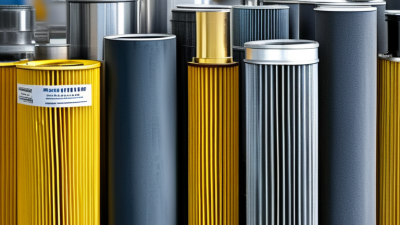
Cartridge filters are compact filtration units used in water, chemical, and industrial processing systems. They remove suspended particles from flowing liquids. Unlike open-bed filters, cartridges fit inside a sealed housing. This design supports cleaner maintenance and predictable installation.

Some cartridges use pleated membranes, while others contain wound or porous depth media. The folds create more surface area inside a small cylinder. Cartridge Metal Filters can provide strength where pressure, heat, or repeated cleaning creates extra stress. They are not magic. Their performance depends on correct sizing and regular inspection.

When liquid enters the housing, pressure pushes it through the filter material. Larger particles remain on the outer surface or inside the media. Fine particles become trapped within smaller pores. A pressure gauge helps technicians observe clogging during operation. In practice, rising pressure often signals reduced flow and a cartridge nearing replacement. Waiting too long can damage pumps or disturb production quality.

Selection depends on particle size, flow rate, temperature, and chemical compatibility. A filter rated for very fine particles may restrict flow too quickly. The choice is rarely perfect. Engineers should compare laboratory data with actual operating conditions. Housing seals also matter, because a damaged gasket can allow untreated liquid to bypass the cartridge. Testing the filtered liquid remains essential. That step catches problems specifications may miss.

Top 10 Cartridge Filter Manufacturers in the World? — What Cartridge Filters Are and How They Work

Cartridge filters are replaceable cylindrical elements that remove suspended solids, microorganisms, chemicals, or other contaminants as fluid passes through a porous medium. The comparison below presents ten widely used cartridge filter constructions and their typical technical characteristics without listing company or brand information.

Technical values are typical industry ranges. Actual performance depends on filter design, fluid properties, operating pressure, temperature, and the manufacturer's validated specifications.
No. Cartridge Filter Type How It Works Typical Particle Rating Common Filter Materials Typical Applications Main Advantages Important Limitations
1 Pleated Depth Cartridge Fluid flows through folded media, which provides a large surface area and captures particles throughout the media structure. 1–100 µm nominal Polypropylene, polyester, cellulose blends Process water, cooling water, chemicals, food and beverage prefiltration High dirt-holding capacity and relatively low pressure drop Standard grades are not necessarily suitable for microorganism removal or sterile filtration
2 Membrane Cartridge A thin membrane retains particles by surface filtration; some membrane types also provide validated microorganism reduction. 0.1–10 µm typical Polyethersulfone, PTFE, nylon, PVDF Pharmaceutical processing, laboratory fluids, beverage clarification, sterile filtration High and precise retention when properly validated More sensitive to fouling and usually more expensive than depth media
3 Ultrafiltration Hollow-Fiber Cartridge Fluid passes through microscopic pores in hollow fibers, retaining colloids, macromolecules, and many microorganisms. Approximately 0.01–0.1 µm Polyethersulfone, polysulfone, cellulose-based polymers Water purification, wastewater reuse, protein concentration, biotechnology Removes very small suspended contaminants and operates continuously in some systems Requires effective pretreatment and cleaning to control fouling
4 Melt-Blown Polypropylene Cartridge Thermally bonded polymer fibers form a graded depth structure that traps particles through the thickness of the element. 1–100 µm nominal Polypropylene Water treatment, reverse-osmosis pretreatment, general industrial filtration Economical, chemically resistant, and available in graded-density designs Usually disposable and can have a lower dirt capacity than some pleated designs
5 String-Wound Cartridge A controlled winding pattern creates progressively tighter passages that retain particles at different depths. 1–100 µm nominal Polypropylene, cotton, polyester, glass fiber Well water, industrial water, paints, oils, and viscous liquids Effective depth loading and suitable for liquids with variable particle sizes Fiber shedding and compatibility must be evaluated for critical processes
6 Carbon Block Cartridge Activated carbon adsorbs many dissolved organic compounds while the carbon block also provides mechanical particle filtration. 0.5–10 µm nominal, depending on design Activated carbon with a polymeric binder Chlorine reduction, taste and odor control, organic contaminant reduction Combines adsorption with particle removal in one element Does not remove all dissolved salts; adsorption capacity decreases as the carbon becomes exhausted
7 Carbon-Wrapped or Carbon-Filled Cartridge Granular or powdered activated carbon removes selected dissolved contaminants by adsorption; an outer layer may capture particles. 5–50 µm for the particle layer Granular activated carbon, carbon fiber, polypropylene or polyester wrap Point-of-use water treatment, odor reduction, prefiltration for process water Higher carbon volume can provide useful adsorption capacity May release carbon fines without adequate post-filtration and has limited particle retention
8 Ceramic Cartridge Water passes through interconnected ceramic pores that physically retain suspended particles and many microorganisms. Approximately 0.2–1 µm Porous ceramic, often based on alumina or diatomaceous materials Drinking-water treatment, gravity systems, laboratory and specialty filtration Rigid structure, washable surface, and good resistance to many chemicals Low flow rates and vulnerability to cracking or thermal shock in some designs
9 Sintered Metal Cartridge Metal particles are fused under controlled heat to create a durable, interconnected porous structure. 1–100 µm nominal Stainless steel, bronze, nickel alloys High-temperature gases, hydraulic systems, fuel, chemicals, and industrial process lines High mechanical strength, temperature resistance, and potential for cleaning and reuse Higher initial cost and possible corrosion concerns if the alloy is incorrectly selected
10 Porous Plastic Cartridge Rigid porous plastic contains interconnected pores that capture particles as fluid passes through the element. 5–100 µm nominal High-density polyethylene, polypropylene, PTFE Corrosive chemicals, plating solutions, water, and low-pressure industrial applications Lightweight, corrosion resistant, and available in cleanable configurations Pressure and temperature limits are generally lower than those of metal cartridges

Key principle: A cartridge filter's effectiveness is determined by its filtration mechanism, pore or fiber structure, rated retention, flow rate, pressure drop, chemical compatibility, and replacement or cleaning requirements.

Key Types of Cartridge Filters and Their Main Applications

Cartridge filters serve different jobs, so selection should begin with the contaminant, not the equipment price.

Sediment cartridges remove sand, rust, and visible particles from process water.

Pleated cartridges provide greater surface area and longer service life.

Melt-blown cartridges suit general prefiltration, while string-wound designs handle irregular particles in deeper layers.

Membrane cartridges offer finer control for microbial reduction and final filtration.

Activated carbon cartridges reduce chlorine, odors, and some organic compounds.

Applications vary widely.

Food and beverage plants often use staged filtration before filling lines.

Pharmaceutical facilities may require validated membrane filters and strict material compatibility.

In metalworking, cartridges protect spray nozzles from abrasive debris.

Residential systems commonly use sediment and carbon combinations.

Bag Filters can be more practical for high-solid loading, especially when operators need quick replacement.

No filter fits every process.

That assumption causes expensive mistakes.

Tips:

Check the fluid temperature, viscosity, chemical exposure, and expected dirt load before choosing a cartridge.

Compare micron ratings under real operating conditions, not isolated laboratory data.

Monitor pressure drop with a gauge near the housing outlet.

Replace the cartridge before flow becomes unstable.

Small details matter.

I have seen oversized housings waste media, while undersized filters clog within hours.

A trial run, supported by actual water or process samples, often reveals weaknesses that specifications miss.

Criteria for Ranking Global Cartridge Filter Manufacturers

Ranking the top ten cartridge filter manufacturers requires more than comparing production volume or website claims. The strongest evaluation begins with verified filtration performance, pore-size accuracy, flow capacity, and pressure-drop control. Independent laboratory reports matter, especially when filters protect sensitive water, air, or process systems. Manufacturing consistency also deserves close attention. A filter that performs well once is not enough.

Material selection reveals practical expertise. Polypropylene, pleated membrane, stainless steel, and activated carbon serve different operating conditions. Reviewers should examine temperature limits, chemical compatibility, cleanability, and expected service life. Certification and traceable quality records add authority. Technical support matters too, because installation errors can reduce performance quickly. Vent Filters, for example, may require careful attention to airflow, moisture, and contamination risks.

Tips: Request test data, not only brochures. Compare pressure loss at the same flow rate. Check whether ratings use identical test methods. Inspect sample cartridges for pleat spacing, sealing quality, and end-cap strength. Calculate replacement costs over one year, not just the purchase price. No ranking is perfect. Application fit can outweigh factory size, and even experienced reviewers may overlook regional service limits. A reliable manufacturer should explain those limits clearly and provide evidence for every major claim.

Top 10 Cartridge Filter Manufacturers in the World

Criteria for Ranking Global Cartridge Filter Manufacturers

This benchmark framework uses measurable procurement dimensions commonly applied to industrial filtration suppliers. The percentage values are an illustrative weighting model for comparing manufacturers without displaying company or brand-specific data.

Top 10 Cartridge Filter Manufacturers in the World

The Top 10 Cartridge Filter Manufacturers in the World are best assessed through measurable performance, not advertising claims. Industry reports from Grand View Research and MarketsandMarkets indicate steady filtration-market growth, with cartridge filtration expanding at roughly 5–7% annually. Their figures vary because some studies include water treatment, chemicals, food processing, and air applications.

A reliable manufacturer should demonstrate tested removal ratings, stable flow, and documented material traceability. Look for polypropylene, pleated membrane, stainless steel, and Metal Filters options. Field experience matters too. A cartridge that looks efficient on paper may clog quickly in muddy water or high-viscosity fluids. That detail is often missed.

The strongest global producers usually combine automated pleating, clean-room assembly, and batch-level quality checks. ISO-based quality systems help, but certificates alone cannot prove service life. Ask for pressure-drop curves, bacterial-retention data, and compatibility tests at operating temperature. Grand View Research identifies industrial and municipal treatment as major demand areas, while MarketsandMarkets highlights growing replacement needs. The ranking remains imperfect. Public revenue data rarely separates cartridge filtration from broader equipment sales. A more honest Top 10 should therefore weigh verified performance, regional support, customization, and failure-response time, rather than factory size alone.

Comparing Product Range, Technology, and Market Coverage

Top 10 Cartridge Filter Manufacturers in the World?

A useful comparison of the world’s top ten cartridge filter manufacturers starts with product range. Strong suppliers usually cover melt-blown, pleated polypropylene, PES, PTFE, nylon, and activated-carbon cartridges. They may also offer depth filters, membrane elements, stainless-steel housings, and automatic changeover systems. This breadth matters when one plant handles cooling water, process chemicals, and high-purity fluids. A wide catalog is not enough. Buyers should check micron definitions, end-cap designs, gasket materials, flow curves, and replacement compatibility. Small details matter.

Technology separates established manufacturers from catalog resellers. Look for controlled fiber formation, consistent pore distribution, cleanroom assembly, and traceable batch testing. For demanding applications, validation packages should include extractables, bacterial retention, pressure limits, and thermal data. Factory audits reveal more than polished brochures. Ask to inspect test methods. Some figures remain difficult to compare because manufacturers use different fluids and test conditions. That weakness affects many rankings.

Market coverage involves more than shipping to many countries. Reliable producers maintain regional inventory, technical support, multilingual documentation, and replacement planning. Local assembly can reduce lead times, yet quality may vary between sites. Check certificates, complaint response times, and field references from similar facilities. In my view, the best supplier is not always the one with the lowest initial price. A cartridge lasting two weeks longer can reduce labor and disposal costs. Still, performance claims need site trials. No ranking is perfect. Real water is less tidy than a datasheet.

How to Select the Best Cartridge Filter Manufacturer

Choosing among the top 10 cartridge filter manufacturers requires more than comparing prices. MarketsandMarkets estimates the industrial filtration market will grow from about USD 33.5 billion in 2023 to USD 47.4 billion by 2028. This growth increases supplier choices, but not necessarily quality. Ask for tested flow curves, pressure-drop data, retention ratings, and batch traceability. A reliable manufacturer should explain whether ratings use absolute or nominal standards.

Start with the process conditions. Record fluid type, temperature, viscosity, flow rate, and contaminant size. Then match the media, core, seal, and housing material. For food, pharmaceutical, or drinking-water applications, request appropriate regulatory documentation and independent test reports. ISO 29463 and relevant NSF standards can help verify filter performance, depending on the application. Do not accept vague claims such as “high efficiency.”

A factory audit can reveal practical weaknesses. Inspect pleat consistency, clean-room controls, leak testing, and quality records. Ask how failed batches are handled. Grand View Research reported continued expansion in industrial filtration, driven partly by stricter water-quality requirements. That trend makes after-sales support important, especially for replacement schedules and emergency delivery. I would also test samples under real operating conditions. Laboratory results may not reflect dirty fluids, sudden pressure changes, or long service periods. No shortlist is perfect. A lower-priced cartridge can become expensive when shutdowns, labor, and premature replacement are included.

FAQS

: What does a sediment cartridge filter remove?

: It removes sand, rust, and visible particles from process water. It works well as basic pretreatment. Not every particle is removed.

Why are pleated cartridges often used?

Pleated cartridges provide more surface area inside a compact housing. They may last longer than simple depth cartridges. Actual life depends on dirt loading.

When are melt-blown and string-wound cartridges suitable?

Melt-blown cartridges suit general prefiltration. String-wound cartridges capture irregular particles through deeper layers. Their performance can vary with particle shape.

What applications use cartridge filters?

Food plants often use staged filtration before filling lines. Pharmaceutical systems may need validated membrane filters. Metalworking systems protect spray nozzles from abrasive debris. Homes commonly combine sediment and carbon cartridges.

What should buyers check before selecting a cartridge?

Check temperature, viscosity, chemical exposure, and expected dirt load. Compare micron ratings under real operating conditions. Laboratory numbers can mislead.

How can operators know when replacement is needed?

Monitor pressure drop near the housing outlet. Replace the cartridge before flow becomes unstable. A clogged filter may increase pressure quickly.

How should cartridge manufacturers be evaluated?

Review verified performance, pore-size accuracy, flow capacity, and pressure-drop control. Inspect material compatibility and quality records. Request test data, not only brochures. Factory size alone proves little.

Does a wider product range always indicate a better supplier?

No. A broad catalog is not enough. Check gasket materials, end-cap strength, flow curves, and replacement compatibility. Regional support and inventory also matter. This judgment can fail without site trials.

How should total cartridge cost be compared?

Calculate purchase, labor, disposal, and replacement costs over one year. A cartridge lasting two extra weeks may reduce operating expenses. Still, longer life claims need real samples. Datasheets are cleaner than real water.

Conclusion

This article provides a practical overview of Cartridge Filters, explaining their structure, filtration principles, and role in removing suspended particles, contaminants, and impurities from liquid or gas streams. It introduces major filter types, including pleated, melt-blown, membrane, depth, and high-flow designs, while highlighting their common applications in water treatment, food and beverage processing, pharmaceuticals, chemicals, electronics, and industrial manufacturing.

The ranking of the top 10 global cartridge filter manufacturers is based on factors such as product quality, filtration efficiency, material options, innovation, production capacity, certifications, customer support, and international market coverage. The article also compares how different manufacturers perform in product range, technology, customization, durability, and service. Finally, it offers practical guidance for selecting the most suitable supplier by considering operating conditions, target contaminants, flow rate, pressure requirements, replacement costs, compliance needs, and long-term reliability.

Sophia

Sophia

Sophia is a dedicated marketing professional at Hangzhou Tianshan Precision Filter Material Co., Ltd. (TS FILTER), one of China’s leading manufacturers in liquid and gas filtration solutions. With a profound understanding of the filtration industry, she specializes in presenting the comprehensive......
Previous Top 10 Steam Filter Options for Global Buyers Today?