Picking Metal Filters isn’t just about grabbing the finest mesh or going with the cheapest option. Honestly, it’s a bit more nuanced than that. You have to think about what you’re trying to catch, whether it’s moving through a liquid or a gas, and what kind of conditions the filter will be up against. Like, a screen in a water line? That might need totally different pore sizes and materials than one handling hot process air. So yeah, the details really matter.
First off, start with what you actually need—the filtration rating and the particle size you're trying to catch. From there, look at the metal type, operating temperature, pressure limits, and expected flow rate. You'd be surprised: even tiny differences in mesh opening can mess with both particle retention and flow. So take a close look at the product datasheet, and don't be shy about asking the supplier how they measure their rating. If the spec feels vague, that's a red flag—pause and dig deeper.
There's no universal best filter out there, honestly. But that's worth thinking about a little more.
Honestly, these seven tips are a solid way to cut through the marketing noise and actually compare your options. You'll want to think about things like cleaning access, how often you'll need replacements, connection dimensions—and whether you can even inspect the filter once it's installed. Don't settle for a generic brochure; ask for documentation that reflects your real operating conditions. And if a spec doesn't quite make sense, get it clarified before you place the order. It's tempting to just look at the sticker price, but that can make you miss the maintenance time or pressure drop down the road. Here's the thing: those trade-offs aren't always obvious. Taking the time to compare carefully can help you find a filter that's actually durable and fits your needs—and it might also reveal where you're still missing key information.
Before comparing metal filters, define what the process must remove. Are you catching visible scale, fine catalyst dust, or occasional weld debris? These particles behave differently. Note the target particle size and whether the stream is liquid, gas, or hot vapor. Small details matter. A filter chosen for a clean water line may clog quickly in viscous oil or a dusty gas stream.
Write down normal and peak operating conditions, not just the numbers on a calm day. Record temperature, pressure, flow rate, viscosity, and chemical exposure. Check startup surges and cleaning cycles too. A stainless mesh can tolerate heat, yet the wrong alloy may corrode in a salty or acidic process. A material compatibility chart can help, but verify suitability for the actual fluid and temperature.
Consider how often the filter can be inspected and cleaned. If operators can rinse a screen each shift, a reusable element may be practical. If access is awkward or shutdowns are costly, a fine element could create more pressure drop and maintenance than expected. Track differential pressure during a trial. It signals rising resistance, but not always its cause. I would still inspect the captured debris; the first assumption is sometimes wrong.
Metal selection starts with the fluid. A filter that handles clean water may fail in a warm salt solution. Stainless steel is often used for water, oils, and many mild process fluids, but the grade matters. Chlorides can pit some stainless alloys, especially when heat and stagnant pockets are present. Check a compatibility chart against the exact concentration and operating temperature. Names aren’t enough.
Then consider the surroundings. Humid rooms, outdoor spray, washdown chemicals, and temperature swings can all affect service life. Carbon steel may be economical in dry settings, yet moisture can make it rust quickly without protection. Nickel alloys or titanium may suit more aggressive fluids, though their cost should match the duty. Also check contact with nearby metals: dissimilar materials can corrode faster when an electrolyte is present. Ask about pressure, cleaning agents, and how often the element will be removed. A chemically compatible mesh can still deform under pressure or clog with sticky solids.
Easy to overlook. If test data is limited, trial a sample under real operating conditions and inspect it afterward. I wouldn’t rely on a generic chart alone; actual process conditions can be messier.
Match the filter rating to the particle size that can actually damage your equipment. A rating of 10 micrometres is not automatically a promise to remove every particle measuring 10 micrometres. Check whether the rating is nominal or absolute, and ask for the test method and efficiency at the stated size. Small details matter.
For hydraulic metal filter elements, ISO 16889:2022 uses a multi-pass test and reports the beta ratio. The ratio compares particle counts upstream and downstream at a stated particle size. A beta ratio of 1,000 corresponds to 99.9% removal at that size under the test conditions. That number is useful, but it is not a guarantee for every fluid, flow rate, or installation. A fine rating can also increase pressure drop as the element loads. Check the manufacturer’s differential-pressure limits against your system’s flow and operating temperature. The awkward part: real contamination is mixed, not neatly sorted into one particle size. Choose a rating from equipment tolerances and fluid-cleanliness targets, then verify performance data. If the supplier cannot provide size-specific results, pause and ask why. ISO 16889 does not cover every filtration application, so confirm that its test conditions fit yours.
| Tip | What to Check | Practical Selection Guidance | Example or Verification |
|---|---|---|---|
| 1 | Define the target particle size | Identify the smallest particles that must be removed and the required fluid or gas cleanliness. Choose a rating based on that requirement, rather than selecting a filter by appearance or mesh count alone. | If the process must capture particles around 25 µm, specify a tested rating suitable for that target and confirm the required capture efficiency. |
| 2 | Distinguish nominal from absolute ratings | “Nominal” and “absolute” do not have one universal definition across all filter suppliers. A micron value without a stated test method or efficiency can be difficult to compare. | Ask for the retention efficiency at the stated particle size and the test method used. Do not assume that a nominal 10 µm rating captures every particle larger than 10 µm. |
| 3 | Match the rating to the process | Select a rating fine enough for downstream equipment or product needs, while avoiding unnecessarily fine filtration that may increase pressure drop or shorten service intervals. | Compare the required particle limit with the equipment manufacturer’s cleanliness specification, where one is available. |
| 4 | Check the metal and fluid compatibility | Confirm that the filter material and any joining or support materials are compatible with the process fluid, cleaning chemicals, and operating environment. | Stainless steel is commonly used in metal filter construction, but grade selection depends on the fluid and conditions. Verify corrosion compatibility for the specific application. |
| 5 | Compare operating conditions | Check the element’s allowable differential pressure, temperature limits, flow rate, and pressure-cycle requirements. These limits vary by construction and should come from the element’s technical documentation. | Request pressure-drop data at the intended flow rate and fluid viscosity, plus the maximum permitted differential pressure. |
| 6 | Consider cleaning and reuse | For reusable metal filters, confirm the approved cleaning method and whether cleaning affects the filter rating, integrity, or service life. | Ask whether backflushing, ultrasonic cleaning, or another method is permitted for the specific element. Inspect for damage before returning it to service. |
| 7 | Verify fit and documentation | Confirm dimensions, connection type, seal material, and installation orientation. Keep records of the rating, test basis, operating limits, and replacement or cleaning criteria. | A correctly rated element can still perform poorly if it bypasses at the seal or does not fit the housing properly. |
A metal filter can look robust and still restrict a system more than expected. When comparing Mesh Metal Filters, check the stated flow capacity at the conditions you will actually use. Flow ratings depend on factors such as fluid viscosity, temperature, and particle load. A rating measured with clean water may not match thicker fluid or a filter that is beginning to collect debris. Small details matter.
Tip: Match the filter’s rated flow to your system’s normal and peak demand. Then check its maximum working pressure, not just the pressure shown during routine operation. Pumps can create brief pressure spikes, especially during startup or when a valve closes quickly. Leave a sensible margin below the filter’s limit. Check the housing, seals, and connections too; the weakest component sets the safe boundary. Keep the manufacturer’s rating sheet nearby.
It is easy to focus on mesh size and overlook pressure drop. I still find that detail easy to miss. Compare pressure-drop data at your expected flow, and ask how loading changes the reading. A gauge before and after the filter can reveal rising resistance during service. Don’t assume a larger filter will always solve it; the setup and fluid conditions matter. A quick fit on paper may need a second look.
How to read this chart: The bars show theoretical flow calculated from circular filter area at a constant face velocity of 0.1 m/s (flow = area × velocity). They are illustrative estimates, not product ratings; actual capacity depends on the filter media, open area, fluid, and allowable pressure drop. Before buying, confirm the required flow, clean and dirty pressure-drop limits, and maximum operating pressure against the filter element and housing specifications.
Tip: Verify the dimensions before ordering a replacement. Measure the filter’s length, outside diameter, and seating area, then compare them with the equipment drawing. A filter that looks close may still leave a gap or fail to seal. Check the gasket position, too. Small differences matter.
Tip: Match the connection type and size to the housing. Threaded, flanged, and clamp connections are not interchangeable. Confirm thread standards, port dimensions, and the required sealing method in the equipment documentation. Check the material against the fluid, operating temperature, and cleaning routine. A connection can fit physically but still be unsuitable for service.
Tip: Confirm compatibility under actual operating conditions. Compare the filter’s pressure and temperature limits with the system’s normal range and possible start-up surges. Review flow direction and allowable pressure drop; a mismatch can reduce performance or interrupt flow. For 1μm Metal Filters, verify how the micron rating is defined and tested rather than assuming every rating means the same thing. Ask for the technical data sheet when details are unclear. I’ve seen dimensions get checked carefully while pressure limits are overlooked. It happens. Recheck the full assembly before installation.
Before choosing a metal filter, match its cleaning needs to your actual routine. Washable Metal Filters can reduce repeat purchases, but washing still takes time and care. Check whether the filter can be rinsed, brushed, or cleaned with a specified solution. A fine mesh may trap stubborn residue in its corners. Gentle cleaning matters; aggressive scrubbing can deform it.
Check the expected service life under conditions similar to yours, not just an ideal rating. Dust load, heat, moisture, and cleaning frequency can all affect performance. It is tempting to rank filters by lifespan alone, but that can be a poor shortcut. A filter that lasts longer may be harder to inspect or maintain. Check for bent mesh, corrosion, or a poor fit during routine cleaning. Small signs matter.
Ask which replacement parts are available, such as seals, frames, or retaining clips. Confirm that those parts can be ordered separately and match the filter’s exact dimensions. Replacing a worn seal may be cheaper than replacing the whole assembly, though not every design allows it. Keep the specifications. Before buying, compare cleaning time, realistic service life, and parts access together; overlooking one can make a seemingly convenient filter frustrating later.
A filter’s purchase price is only the beginning. Compare expected service life, cleaning labor, replacement parts, and the cost of production pauses. A lower-priced unit may need more frequent attention, while a durable option can reduce maintenance interruptions. Check pressure-drop data too; a filter that restricts flow may increase operating costs. Small details matter.
Ask suppliers for a clear quote covering materials, testing, delivery, and recommended maintenance. For Titanium Metal Filters, request documentation on pore ratings, operating limits, and material traceability. Confirm how quickly they can answer technical questions and whether replacement elements are readily available. A spreadsheet can still fool you. Estimates often miss cleaning time or shipping delays, so verify assumptions with your maintenance team. Supplier support has real value when a filter arrives late, performs differently than expected, or needs troubleshooting. Get response times and support responsibilities in writing, then compare the full cost over the filter’s expected service life.
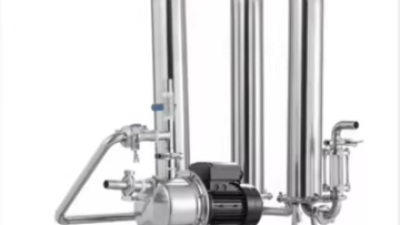
Choosing between a two- and three-stage liquid filter depends on the condition of the liquid and the required level of cleanliness. A two-stage setup is often suitable for batch processing when the liquid contains a manageable amount of particles and a straightforward filtration sequence is sufficient. A three-stage arrangement adds another filtration step, which can help capture progressively finer contaminants or protect a final filter from heavier particle loads. Select filter elements according to the liquid, flow needs, and desired result rather than assuming that more stages are always better; extra stages can add maintenance and may reduce flow.
A portable trolley system is useful where floor space is limited or filtration needs to move between work areas. Its compact, wheeled design supports small-volume, low-flow applications, while a diaphragm or centrifugal pump can be selected to suit the liquid and operating conditions. Hose connections at the inlet and outlet make installation quick and flexible for batch work. Before choosing a configuration, consider the liquid’s viscosity and particle burden, the required processing rate, and how often filters will need changing. These factors help determine whether two stages offer adequate, efficient filtration or whether a third stage provides worthwhile additional protection.
Start with the fluid’s exact concentration and operating temperature. Stainless steel suits many mild fluids, but chlorides can cause pitting. Check compatibility data, then test a sample if conditions are uncertain.
Not necessarily. Warm salt solutions may corrode some stainless alloys, especially in stagnant areas. Names alone are not enough.
Humidity, outdoor spray, cleaning chemicals, and temperature swings all matter. Carbon steel may rust quickly when moisture reaches unprotected surfaces.
Nickel alloys or titanium may suit more aggressive fluids. Their cost should fit the actual operating demands, not just a cautious guess.
No. Pressure can deform mesh, and sticky solids can clog it. Check operating pressure, cleaning agents, and how often the filter will be removed.
Confirm whether it can be rinsed, brushed, or cleaned with a specified solution. Stubborn residue can collect in fine-mesh corners. Use care.
Compare performance under similar dust, heat, moisture, and cleaning conditions. Inspect for bent mesh, corrosion, and poor fit during routine cleaning. Small signs matter.
Check whether seals, frames, and retaining clips are available separately. Match their dimensions to the filter, and keep the specifications. I might overlook that.
Not by itself. A longer-lasting filter may take more time to inspect or maintain. Compare service life, cleaning time, and parts access together.
Choosing the right Metal Filters starts with understanding what the filter must do and the conditions it will face, including the fluid, temperature, and operating environment. Select a metal that is compatible with those conditions, then match the filter rating to the particle size that needs to be captured. A filter that is too restrictive may reduce flow, so check its capacity and pressure limits against the equipment’s requirements.
Before purchasing, confirm that the filter’s dimensions, connections, and installation style fit the system. Consider how it will be cleaned, how long it is expected to last, and whether replacement parts will be available when needed. Finally, compare the total cost over the filter’s service life, not just the initial price, and assess the supplier’s technical support. These checks can help ensure the filter performs reliably and is practical to maintain.