Inquiry
Form loading...
0%

So, you've probably come across Metal Filters and wondered what they’re all about. Well, basically, these are specially designed parts that help separate out particles from gases, liquids, or even molten stuff. You’ll find them everywhere—like in chemical plants, aerospace, pharma, food processing, and industrial water systems. Unlike your typical single-use paper filters, metal ones can handle super high temperatures, pressure swings, and they can be cleaned and reused again and again.

Dr. Elena Marquez, who’s a filtration engineer at Mott Corporation, puts it pretty well—she says, “A metal filter isn’t just a simple barrier; it’s more like a carefully controlled pathway for flow and separation.” That really captures what they do. Manufacturers usually make these filters using sintered metal powder, woven wire mesh, or perforated sheets—as each type creates a different route for liquids or gases to pass through. The size of the pores controls how small or big the particles that get trapped are, and the choice of material determines how tough and resistant to chemicals the filter will be.

When the system is working, contaminated fluid comes in contact with the filter surface. The small molecules just slip right through the tiny openings, while the bigger particles—like dirt, debris, or other contaminants—stay stuck, either on the surface or deeper inside the porous structure. Keep in mind, factors like pressure, viscosity, temperature, and the shape of those particles can all influence how well the filter performs. And surprisingly, a five-micron rating isn’t a one-size-fits-all—sometimes, it behaves differently depending on the specific process, but that detail tends to get overlooked.

One major advantage of metal filters is that they can be cleaned and reused. Methods include backwashing, using gas pulses, ultrasonic cleaning, or applying special chemicals—what works best really depends on the type of alloy and what’s contaminating your system. Stainless steel is pretty much the go-to choice for many applications, but in harsher environments, materials like nickel alloys or titanium might be better suited.

At first glance, it all sounds pretty straightforward—filters that trap particles, easy to clean, repeat. But honestly, real-world systems aren’t always that tidy. The lifespan of a filter really hinges on proper maintenance, correct installation, and consistent operating habits. Even the most carefully designed setup can start to underperform if flow rates jump around or if cleaning isn’t done properly.

This guide will walk you through how metal filters work, how engineers pick the right ones, and what sorts of practical limitations you should keep an eye on—because, at the end of the day, it’s all about making sure your system runs smoothly, no matter what.

What Are Metal Filters and How Do They Work?

What Are Metal Filters?

Metal filters are reusable filtration components made from aluminum, stainless steel, nickel alloys, or other engineered metals. Common forms include woven mesh, perforated sheets, expanded metal, and sintered structures. Their openings act like controlled gates. Larger particles are blocked, while smaller particles may pass through. Some designs also capture particles through interception and inertial impaction.

Their real value depends on the application. Coarse metal mesh can protect fans, pumps, and ventilation coils from dust, fibers, and debris. Fine sintered metal elements can support liquid or gas filtration under high pressure and temperature. Under ASHRAE Standard 52.2, air-filter performance is measured across particles from 0.3 to 10 micrometers. Metal construction alone does not guarantee high efficiency. The pore size, thickness, airflow, and pressure drop matter more.

ISO 16890 also evaluates air filters by particle-size efficiency, giving engineers a clearer comparison. A washable metal filter may reduce replacement waste, but cleaning is not automatically simple. Oil, sticky dust, and corrosion can remain inside the mesh. I have seen maintenance teams underestimate this detail. A filter may look clean while its airflow resistance quietly rises. Design choices should therefore follow measured pressure drop, contaminant type, operating temperature, and required particle efficiency.

How Metal Filters Are Structured

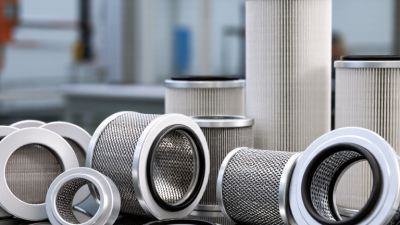
Metal filters are structured from carefully arranged metal elements, not from one solid barrier. In Mesh Metal Filters, thin wires cross at regular intervals to create openings. These openings determine which particles pass through and which remain on the surface. Wire diameter, weave pattern, and opening size all affect filtration performance.

Some filters use perforated sheets instead of woven mesh. Small holes are punched or formed through stainless steel, aluminum, or other suitable metals. A support layer may sit behind the filtering surface. It prevents bending under pressure and helps maintain a stable flow path.

The frame or cartridge shell holds everything in alignment. Small detail, big effect.

In practical inspections, the edge seal often deserves as much attention as the mesh. A weak weld or uneven joint can create a bypass route around the filtering area. That route may allow contaminants through, even when the mesh looks clean. Multi-layer filters can combine coarse and fine screens, reducing stress on the finest layer. Their structure is more complex, though. Cleaning may become harder.

No filter is perfectly uniform. Manufacturing tolerances can slightly change pore dimensions across one surface. Engineers therefore examine pressure drop, flow rate, material strength, and operating temperature together. I have found that a filter performing well in dry testing may behave differently when particles become wet or sticky. That assumption needs checking.

How Metal Filters Capture and Separate Particles

What Are Metal Filters and How Do They Work?

Metal filters capture and separate particles by controlling the path through a porous surface. Common designs use woven wire mesh, perforated sheets, or sintered metal powder. Each structure creates openings that allow fluid to pass while holding back unwanted solids.

A filter rated at 1μm Metal Filters may retain particles near one micrometer, but the rating needs careful interpretation. Some ratings describe absolute removal, while others describe nominal performance under specific test conditions. The pore is smaller. Particles larger than the opening are stopped by direct sieving. Smaller particles may also collide with metal fibers, change direction, and become trapped through inertial impaction or surface adhesion.

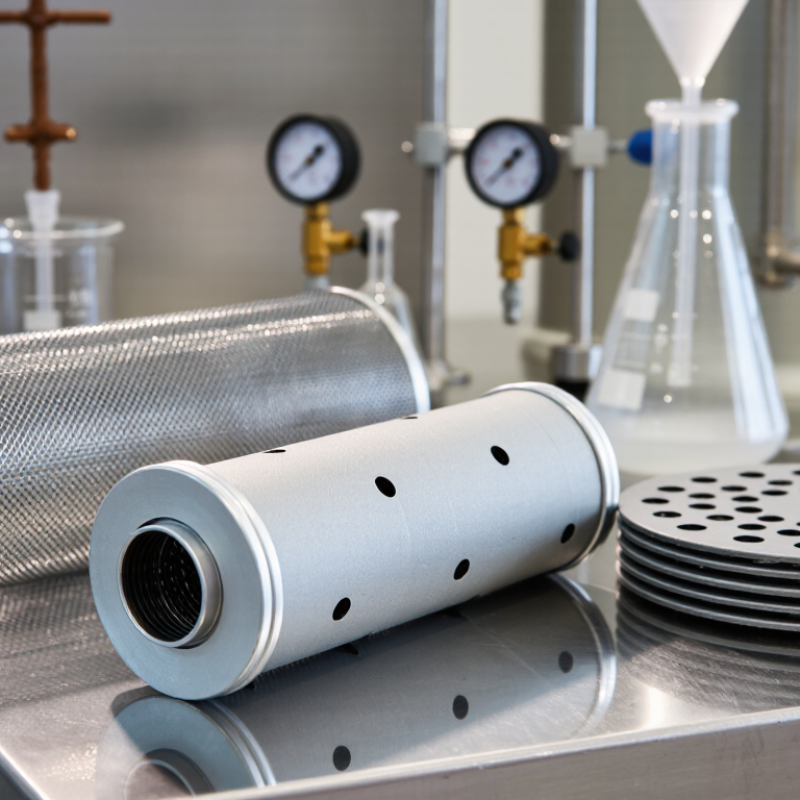
In practical equipment, pressure pushes the liquid or gas through the filter. A pressure gauge can reveal rising resistance as particles build a cake on the surface. This layer may improve separation for a while, although it can reduce flow and increase energy use. Metal filters also tolerate heat, vibration, and repeated cleaning better than many fragile media. Still, cleaning changes performance. Scrubbing, backwashing, or thermal treatment can slightly alter pores or leave particles behind. Not always. Particle shape, fluid viscosity, and flow speed can change the result, so laboratory ratings should not be accepted without checking real operating conditions. A filter that performs well with round test particles may behave differently with fibers, flakes, or irregular dust.

The Main Types of Metal Filters

Metal filters separate solids from liquids or gases by forcing flow through controlled openings. Their performance depends on pore size, wire thickness, pressure, temperature, and the material being filtered. In a workshop, a filter may look simple, yet a small change in opening size can alter flow dramatically.

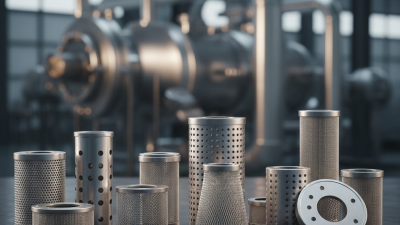
Woven wire mesh is made from interlaced metal wires. It offers predictable openings and is useful for screening particles, protecting pumps, and supporting finer filter layers. Perforated metal filters use punched holes in a sheet. They are rigid, easy to clean, and suitable for coarse separation. Hole shape matters. Round holes resist deformation better than irregular cuts.

Sintered metal filters contain bonded metal particles. Their connected pores can capture smaller particles while keeping the structure strong under heat and pressure. They are often selected for demanding industrial systems. Expanded metal filters use stretched sheets with diamond-shaped openings. They provide high strength and low material waste, but their openings are less precise.

In practical evaluation, the clean filter rating is not enough. Dust, oil, and moisture can change resistance quickly. A filter that worked well in a dry test may clog sooner in real service. That limitation is easy to overlook. Engineers should compare pressure drop, cleaning methods, corrosion resistance, and expected particle loading before selecting a type. No single design fits every process.

What Are Metal Filters and How Do They Work? - The Main Types of Metal Filters
Filter Type How It Works Typical Construction Common Filtration Range Key Advantages Typical Applications Main Limitations
Woven Wire Mesh Filter Particles are retained when they are larger than the openings formed by interlaced metal wires. It is primarily a surface-filtration method. Plain, twill, or Dutch-weave wires made from stainless steel or other corrosion-resistant metals. Approximately 5 to 1,000 micrometres, depending on the weave and wire diameter. Consistent openings, good mechanical strength, easy inspection, and relatively simple cleaning. Hydraulic systems, polymer melt filtration, air screens, laboratory equipment, and pre-filtration. Fine mesh can have a relatively high pressure drop and may clog when exposed to heavy contaminant loading.
Sintered Porous Metal Filter Particles are captured within a network of interconnected pores throughout the filter body, providing depth filtration. Metal powder or metal fibers compacted and sintered without fully melting the material. Commonly about 0.5 to 100 micrometres, with the exact rating dependent on pore structure and design. High-temperature capability, structural rigidity, cleanability, and resistance to many mechanical stresses. Gas separation, chemical processing, pharmaceutical processing, fuel systems, and high-temperature service. Usually costs more than simple mesh and may require careful cleaning to avoid damaging the porous structure.
Perforated Metal Filter Fluid passes through regularly shaped holes, while larger solids are blocked at the surface. Metal sheet manufactured with round, square, or custom perforations. Typically about 0.5 to 20 millimetres, although larger openings are also available for screening. High open area, low pressure drop, excellent durability, and good resistance to impact and abrasion. Coarse screening, pump protection, intake systems, equipment guards, and solid-liquid separation. Not generally suitable for fine particle removal unless combined with a finer filter layer.
Wedge Wire Filter Profile wires create continuous, precisely controlled slots. Particles larger than the slot width remain on the surface while the fluid flows through. Triangular or profiled support wires welded to longitudinal support rods. Approximately 25 micrometres to several millimetres, depending on slot size and application. Continuous slots reduce blinding, provide strong mechanical support, and allow effective backwashing. Water wells, intake screens, food processing, mineral processing, and industrial solid-liquid separation. Manufacturing geometry can be more complex, and very fine slot sizes may increase cost and pressure loss.
Metal Fiber Felt Filter A dense network of randomly arranged metal fibers captures particles through interception, impaction, and depth filtration. Fine metal fibers bonded by sintering or other controlled consolidation methods. Often about 1 to 100 micrometres, depending on fiber diameter, thickness, and density. High dirt-holding capacity, good permeability, flexibility in design, and strong resistance to thermal shock. Hydraulic filtration, fuel systems, gas filtration, aerospace systems, and high-temperature equipment. Pressure drop can rise as the depth structure loads with contaminants; cleaning requirements depend on the captured material.
Expanded Metal Filter Fluid passes through diamond-shaped openings created by slitting and stretching a metal sheet; larger particles are screened out. Expanded metal sheets with controlled strand width, opening size, and thickness. Commonly about 0.5 to 10 millimetres for screening and support applications. Lightweight, rigid, economical, and capable of providing a large open area. Pre-filters, ventilation systems, protective screens, drainage layers, and filter-support structures. Opening geometry is less suitable for precision fine filtration, and particles may pass through if they are smaller than the apertures.
Metal Membrane Filter A thin, highly uniform porous metal layer provides precise separation through controlled pores and, in some designs, surface filtration. Microporous metal sheet or multilayer porous-metal construction. Often below 1 micrometre to several micrometres, depending on the membrane design. Precise separation, high thermal stability, chemical resistance, and potential for repeated cleaning. Gas processing, sterile-process equipment, fine chemical separation, and specialized laboratory systems. Fine pores can produce higher pressure drop and require careful compatibility and maintenance assessment.

Key Materials Used in Metal Filter Manufacturing

Metal filters remove particles by forcing fluid or gas through controlled openings. Their material determines strength, corrosion resistance, temperature tolerance, and cleaning method. Stainless steel is widely used because chromium forms a protective oxide layer. Austenitic grades also handle moisture and many process chemicals. However, stainless steel is not universally resistant. Chlorides, acids, and heat can still cause damage.

Nickel-based alloys serve harsher environments. They retain strength at elevated temperatures and resist several aggressive chemicals. Titanium offers low weight and strong resistance to seawater, though its cost can limit use. Aluminum is lighter, but it needs careful selection under pressure or chemical exposure. Material choice is never just a catalog decision.

Manufacturers may weave metal wire, perforate sheet, or sinter metal powder into a rigid porous element. Woven mesh provides predictable openings and easy visual inspection. Sintered powder creates deeper passages and supports fine filtration. Washable Metal Filters often use stainless steel or durable alloys. They may support backwashing, brushing, or ultrasonic cleaning. Cleaning pressure must match the pore structure. Too much force can distort thin mesh. That detail is easy to miss.

Common Applications of Metal Filters

What Are Metal Filters and How Do They Work?

Metal filters remove particles by forcing fluid or gas through a controlled network of openings. Their structures may use woven wire, perforated sheets, sintered powder, or porous metal fibers. Pore size determines which particles remain trapped. Pressure, temperature, viscosity, and chemical exposure also affect performance. A filter can look clean and still be partially blocked. That detail is easy to miss during routine inspection.

Common Applications of Metal Filters

Metal filters support many industrial processes. Food facilities use them to protect pumps and remove unwanted particles from liquid ingredients. Pharmaceutical production relies on carefully specified filtration for process fluids and gases. Chemical plants use corrosion-resistant designs in aggressive environments. Water-treatment systems often install them before sensitive valves, membranes, and sensors. Titanium Metal Filters are useful where low weight, corrosion resistance, and repeated cleaning matter. Gas systems may use metal filters to capture fine debris before regulators or measurement equipment. In practice, the right choice depends on particle shape, flow rate, and cleaning method. A universal filter does not exist.

Tips: Check pressure changes regularly. Inspect seals, welds, and support screens during maintenance. Confirm the filter material matches the process fluid. Cleaning may restore flow, but it cannot repair damaged pores. Keep records of replacement intervals. This sounds obvious, yet it is often overlooked. Test performance after installation, because laboratory specifications may not match actual operating conditions.

What Are Metal Filters and How Do They Work?

Metal filters are porous components made from materials such as stainless steel, nickel alloys, or sintered metal. Their interconnected pores allow liquids or gases to pass while retaining particles through surface and depth filtration. Unlike many disposable media, metal filters can often be cleaned and reused in high-temperature, high-pressure, or corrosive processes.

The chart shows representative nominal filtration ratings commonly specified for metal-filter applications. Actual ratings depend on pore structure, filter construction, fluid properties, operating conditions, and the required particle-removal efficiency.

Common Applications of Metal Filters

Metal filters are used in hydraulic systems, process-water treatment, compressed-gas systems, food and beverage processing, pharmaceutical manufacturing, and aerospace fuel systems. Their key advantages include mechanical strength, thermal resistance, chemical compatibility, cleanability, and long service life.

FAQS

What are metal filters made from?

They use aluminum, stainless steel, nickel alloys, or other engineered metals. Common forms include woven mesh, perforated sheets, expanded metal, and sintered structures.

How do metal filters capture particles?

Their openings act like controlled gates. Larger particles stop at the surface, while smaller particles may pass through. Some particles collide with metal fibers and become trapped.

Where are coarse metal filters commonly used?

Coarse mesh can protect fans, pumps, and ventilation coils. It catches dust, fibers, and loose debris. The mesh may look simple, but it prevents expensive contamination.

Does metal construction guarantee high filtration efficiency?

No. Pore size, thickness, airflow, and pressure drop matter more. A strong metal filter can still perform poorly with unsuitable openings.

What does a one-micrometer rating mean?

It may indicate retention near one micrometer under specific test conditions. However, some ratings are nominal, while others describe absolute removal. Always check the testing method.

How can pressure gauges help with maintenance?

Rising pressure usually shows growing resistance inside the filter. Particles form a surface layer, sometimes improving separation temporarily. Later, airflow falls and energy use increases.

Are washable metal filters easy to clean?

Not always. Oil, sticky dust, and corrosion can remain inside the mesh. A filter may look clean while its airflow resistance quietly rises.

Can repeated cleaning change filter performance?

Yes. Scrubbing, backwashing, or heat treatment may alter pores or leave particles behind. The result is not perfectly predictable. Real operating checks still matter.

Why can laboratory results differ from field performance?

Round test particles behave differently from fibers, flakes, or irregular dust. Fluid viscosity, particle shape, and flow speed also change separation. Laboratory ratings need practical verification.

Conclusion

Metal Filters are engineered components designed to remove, separate, or control particles, droplets, and contaminants from gases and liquids. They are typically built from woven wire mesh, perforated sheets, sintered metal powders, or layered porous structures. Their performance depends on pore size, material strength, surface area, and the way fluid moves through the filter. As a fluid passes through, unwanted particles are retained by mechanisms such as surface screening, depth filtration, and inertial separation, while the cleaned fluid continues through the structure.

The main types include mesh filters, sintered filters, porous metal elements, and specialized multi-layer designs. Common manufacturing materials include stainless steel, nickel alloys, aluminum, bronze, and other corrosion-resistant metals selected for temperature, pressure, and chemical compatibility. Metal Filters are widely used in industrial fluid processing, gas purification, hydraulic systems, chemical production, food and beverage equipment, energy systems, and environmental applications. Their durability, cleanability, and resistance to heat make them suitable for demanding conditions where consistent separation and long service life are required.

Ethan

Ethan

Ethan is a dedicated marketing professional at Hangzhou Tianshan Precision Filter Material Co., Ltd. (TS FILTER), one of China's leading manufacturers in the filtration industry. With a deep understanding of the company's extensive range of products, including filter cartridges, filter capsules,......
Previous China Top 10 Metal Filter Manufacturers for Global Buyers