Choosing Filter Capsules in 2026 isn't just about pore sizes and price tags. The right capsule has to fit your fluid, the process pressure, the temperature, and whatever cleanliness level you're aiming for. Get one of those wrong, even just a little, and you might see reduced flow, product quality issues, or replacement costs you could've avoided.
Most experienced process teams start with material compatibility. Polypropylene, PTFE, PES, and nylon all suit different jobs. So check chemical resistance carefully — don't just go with a product name you've used before. Look at pressure ratings, membrane area, connection types, and validated operating limits. Manufacturer docs matter here. Traceability matters, too.
And really, think about the actual process.
A capsule for water clarification probably won't need the same performance as one in pharma manufacturing. So look for integrity-testing options, extractables data, sterilization compatibility, and batch certificates. Those details help with qualification and make purchasing more consistent. They also help operators react when performance suddenly changes.
In 2026, sustainability and supply continuity are worth a closer look. Think about capsule lifespan, packaging, disposal requirements, and regional availability. A cheap upfront price can hide frequent changeouts. That said, the priciest option isn't automatically the safest. Total cost includes labor, downtime, testing, and waste.
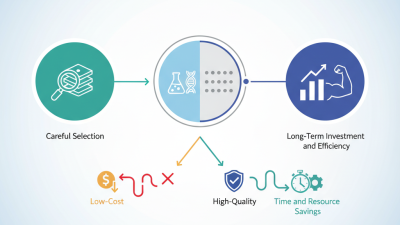
A comparison table can help, sure. But it can still miss real-world problems. Actual viscosity, installation space, and operator habits might not match the specs. Pilot testing is still valuable, even when the datasheet looks great. Ask manufacturers clear technical questions, write down the answers, and confirm every critical claim before you approve. Careful selection isn't perfect. It's just a disciplined process that cuts down uncertainty.
What Filter Capsules Are and How They Work
How to Choose Filter Capsules in 2026?
What Filter Capsules Are and How They Work
Filter capsules are compact, ready-to-use housings containing a filter membrane or depth medium. They connect directly to a fluid line, reducing assembly time and handling errors. In practical applications, they help remove particles, microorganisms, or selected dissolved substances. Their performance depends on the filter material, pore rating, and operating conditions.
A membrane filter mainly separates particles by size. A depth filter traps particles through a thicker, layered structure. Some capsules also use adsorption to capture specific dissolved compounds. Check the rated flow, pressure limit, temperature range, and chemical compatibility before purchase. A capsule rated at 0.2 micrometres may suit microbial reduction, but it does not automatically remove every contaminant. That distinction matters.
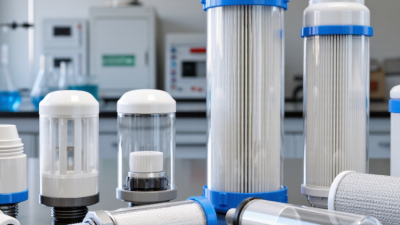
I still find one detail easy to overlook: the fluid itself. Viscous liquids can reduce flow sharply. Oils, solvents, and protein-rich solutions may also interact with the filter material. Review technical data, run a small compatibility test, and record pressure changes during use. If sterile filtration is required, rely on validated procedures and documented integrity testing, not pore size alone. A clear housing can reveal discoloration, trapped particles, or uneven loading. Yet visual inspection is only a warning sign, not proof of filtration performance. Choose a capsule that matches the process, not merely the smallest advertised pore size.
How to Choose Filter Capsules in 2026?
What Filter Capsules Are and How They Work
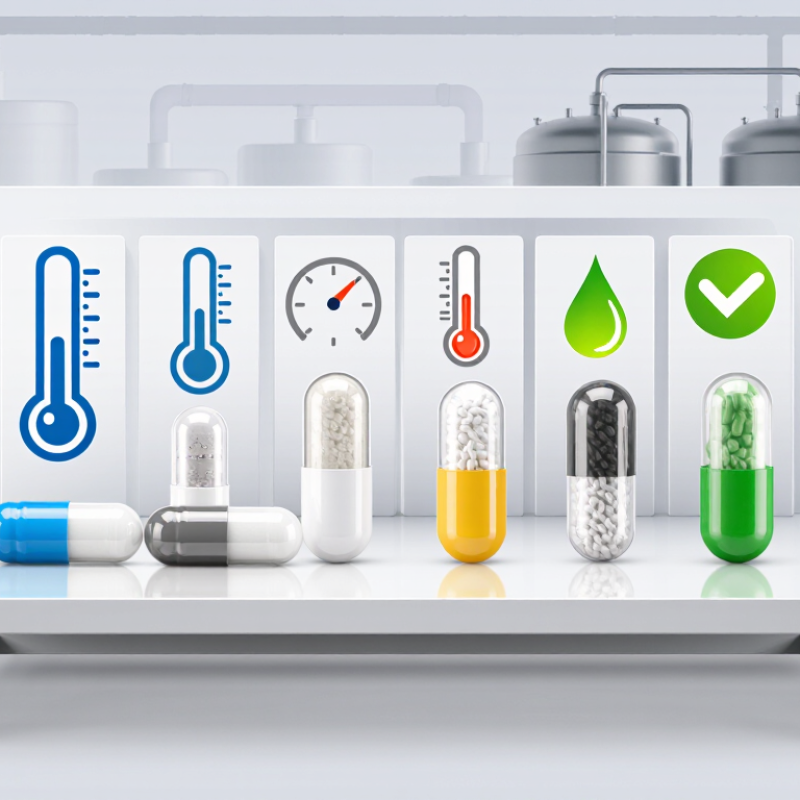
Filter capsules are sealed, ready-to-use filtration units that combine a filter membrane or depth medium with a protective housing and connection ports. As liquid or gas passes through the capsule, particles are retained by depth capture, surface sieving, or both. Common capsule ratings include approximately 5 µm for prefiltration, 0.45 µm for fine clarification, 0.22 µm for sterilizing-grade liquid filtration, and about 0.2 µm for sterile gas venting. The correct choice depends on particle load, flow rate, compatibility, pressure, and the required level of microbial control.
The values shown are typical industry ratings for common capsule-filter applications; actual retention and performance vary with filter design, operating conditions, and validation requirements.
Identifying the Filtration Needs of Your Application
How to Choose Filter Capsules in 2026?
Identifying filtration needs begins with the process, not the capsule shape. Record the fluid type, temperature, viscosity, flow rate, and operating pressure. A clear liquid may still carry fine particles that block a membrane quickly. Measure the smallest contaminant that matters. Then define the required microbial or particulate reduction using validated test methods. Guessing here creates expensive problems later.
Medical Filter Capsules require extra attention to material compatibility, extractables, and sterilization conditions. Check whether the membrane and housing tolerate the fluid for the full contact time. A solvent, protein solution, or buffer can behave differently after heating. Review pressure drop at the actual flow rate, not only the supplier’s ideal test point. Keep a written risk assessment. It supports traceability and more reliable purchasing decisions.
Practical testing remains essential. Run a small trial with representative fluid, including its normal solids load. Watch the pressure gauge as the capsule approaches capacity. A capsule that performs well with clean water may fail with a concentrated formulation. I have learned that a neat specification can still be wrong when the process changes between batches. Recheck sampling methods, connection types, and cleaning or disposal procedures. Leave room for uncertainty. Real production rarely behaves perfectly.
Comparing Filter Capsule Materials and Membrane Types
How to Choose Filter Capsules in 2026?
Comparing Filter Capsule Materials and Membrane Types
Choosing a filter capsule starts with the process fluid, not the pore-size label. In practical trials, I record temperature, pressure, viscosity, and exposure time before selecting materials. Polypropylene offers strong chemical resistance and a practical housing structure. Polyethersulfone membranes suit many aqueous streams because they wet quickly and provide stable flow. PTFE handles aggressive chemicals and gases, but hydrophobic membranes may require pre-wetting for liquid filtration. Small details matter.
Membrane structure changes performance. Depth media trap particles throughout a thicker matrix and can hold substantial contaminant loads. Screen membranes capture particles mainly at the surface, allowing more predictable retention but often lower dirt capacity. For critical liquid clarification, 0.22 Micron Filter Capsules can support microbial retention when the membrane and process are properly validated. The rating alone proves little. Integrity testing, pressure limits, and chemical compatibility still need attention.
I once favored the smallest pore size for every application. That choice reduced flow and increased replacement frequency. I now compare retention, throughput, extractables, and cleaning requirements together. Nylon can provide useful strength and broad compatibility, yet it may interact with certain solutions. Cellulose-based membranes can deliver gentle filtration, but their wet strength deserves careful checking. A capsule that looks ideal on paper may clog during a cloudy, viscous batch. Testing with the actual fluid remains the most reliable decision tool. My selection notes are never final; new fluids expose old assumptions.
Choosing the Right Pore Size and Filtration Rating
Choosing Filtration Capsules in 2026 starts with the fluid, not the product catalogue. The correct pore size protects your process while maintaining practical flow and capacity. A 0.2-micron capsule may suit fine microbial control, while a larger pore size can remove visible particles without excessive pressure. The best choice depends on particle shape, concentration, viscosity, and temperature.
Do not treat filtration rating terms as interchangeable. A nominal rating indicates general particle reduction under defined conditions. An absolute rating suggests tighter retention performance, but the test method still matters. Ask for validation data, pressure limits, material compatibility, and extractables information. Check whether the rating applies to the entire capsule or only its filter media. Small details can change performance.
Tips: Test a sample before full-scale use. Record inlet pressure, outlet pressure, flow rate, and operating temperature. Watch the pressure gauge during the first few cycles. A rapid increase may indicate poor sizing or unexpected contamination. I have found that laboratory results can look excellent, yet real process fluids behave differently. That is an uncomfortable but useful reminder. Leave safety margin in the flow estimate, and review the choice when the fluid or production conditions change.
Evaluating Flow Rate, Capacity, and Pressure Requirements
How to Choose Filter Capsules in 2026?
Flow rate is the starting point, but it should not stand alone. Check the liquid’s viscosity, temperature, and particle load before selecting a capsule. A clear water sample may pass quickly, while a dense process fluid slows dramatically. Use a realistic operating flow rate, not the maximum printed value. Leave a practical margin for rising pressure drop. Small margins can create large problems.
Capacity describes how much contaminant the capsule can hold before performance declines. Estimate the expected solids load from actual production data when possible. Laboratory results can mislead if the test fluid is cleaner than the process stream. Watch for discoloration, slower flow, and increasing differential pressure. Replace the capsule before pressure reaches the approved limit. Do not wait for failure.
Pressure requirements need careful attention. Compare normal inlet pressure, peak pressure, temperature, and pressure-drop limits. The capsule, housing, connections, and seals must work within the same safety range. A staged setup may protect a fine membrane from rapid blockage. It can also increase cost and maintenance. That trade-off deserves review. In practice, selection is rarely perfect. Record pressure and flow during operation, then adjust the next choice using evidence rather than assumptions.
Checking Compatibility, Sterility, and Regulatory Standards
Choosing filter capsules in 2026 requires more than matching pore size. Compatibility, sterility, and regulatory evidence deserve equal attention. In practical trials, a capsule can look suitable yet fail after contact with solvents, buffers, or concentrated proteins. Check the membrane, housing, seals, and maximum operating temperature. Confirm pressure and flow data with your actual fluid, not only with water.
Sterility needs careful wording. “Sterile supplied” and “sterilizing-grade” are not identical claims. Review the sterilization method, package integrity, expiry date, and lot-specific certificate. For a Ts Filter, request validation details and confirm whether the documentation matches your intended process. Regulatory files should identify manufacturing controls, traceability, change control, and relevant quality standards. Requirements may differ by region and application, so outdated certificates can create avoidable risk.
Tips: Test a small batch first. Measure flow before and after sterilization. Record pressure, temperature, contact time, and fluid composition. Ask for extractables and leachables data when product quality is sensitive. I have seen teams trust a familiar specification too quickly. That is a weak habit. A checklist can still miss seal swelling or packaging damage. Inspect the capsule physically, then compare results with the supplier’s controlled records. When evidence is incomplete, pause the qualification instead of guessing.
Selecting a Reliable Filter Capsule for 2026 Applications
How to Choose Filter Capsules in 2026?
Selecting a reliable filter capsule starts with the process, not the product label. Define the fluid, flow rate, temperature, pressure, and required cleanliness level. A capsule used for water may fail with solvents, oils, or concentrated cleaning agents. Check membrane compatibility through supplier data and small-scale testing. Fit matters. Confirm the inlet, outlet, housing connection, and available space before ordering.
In practical trials, I inspect pressure drop at the intended flow rate. A capsule that performs well at 2 liters per minute may restrict production at 10. Review pore size, membrane material, surface area, and maximum operating pressure. Ask for integrity-test methods, batch records, extractables data, and traceability documents. These details support reliable decisions and meet quality expectations in regulated applications. Do not rely on a certificate alone.
For 2026 systems, digital monitoring and lower-waste designs deserve attention. Some capsules can support pressure sensors or automated changeout alerts. Consider the disposal impact, packaging volume, and service life. I once focused too heavily on initial price and overlooked replacement labor. That was a poor calculation. A slightly higher-cost capsule may reduce downtime, but only when its performance is verified. Run a pilot with real fluid, realistic temperature, and repeated cycles. Record every pressure reading. Small details count.
Glass Fiber (GF) Membrane Pleated Filter Cartridge: Structure, Benefits, Applications, and Selection Guide
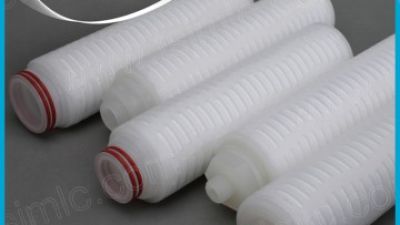
Glass Fiber (GF) Membrane Pleated Filter Cartridges combine a deep, high-area pleated structure with premium glass fiber media to provide high dirt-holding capacity without sacrificing flow performance. Their graded pore network captures colloids, lipids, suspended particles, and other contaminants, making them suitable for liquid clarification and prefiltration. Industry research reflects the growing importance of these technologies: MarketsandMarkets has projected the global membrane filtration market to expand at approximately 9% annually through 2028, driven by stricter quality requirements in industrial and process-water applications.
With a broad pH tolerance of 1–13 and excellent oil resistance, GF cartridges offer wide chemical compatibility across chemical processing, industrial fluids, food and beverage clarification, and equipment protection. They are particularly economical as a safeguard for final membrane filters because they reduce particulate loading and help extend downstream filter life. As a universal replacement option, their standardized configuration supports easy installation, dependable operation, and reduced maintenance-related downtime.
Selection should consider the required particle-retention rating, liquid viscosity, operating temperature, flow rate, and available differential-pressure margin. For heavily contaminated liquids, a larger filtration area or staged prefiltration can improve service life, while critical clarification processes may require validation under actual operating conditions. Recent industrial filtration analyses, including reports from Grand View Research, continue to identify efficiency, operating cost, and longer replacement intervals as key purchasing criteria for modern filtration systems.
FAQS
A filter capsule is a compact housing containing a membrane or depth medium. It connects directly to a fluid line. This reduces assembly time and handling errors.
Membrane filters separate particles mainly by size. Depth filters trap particles inside layered material. Some capsules also adsorb selected dissolved substances.
No. It may support microbial reduction when properly validated. It does not automatically remove dissolved chemicals or every particle.
Check fluid type, viscosity, flow rate, pressure, temperature, and exposure time. Confirm chemical compatibility. Also review the rated flow and pressure limit.
Polypropylene can provide chemical resistance and sturdy housing support. Polyethersulfone often suits aqueous liquids. PTFE may handle aggressive chemicals and gases.
Viscous fluid can sharply reduce flow. Pressure may rise as the capsule loads with particles. A small trial can reveal this problem early.
No. A clear housing may show discoloration, trapped particles, or uneven loading. These are warning signs, not proof. Integrity testing remains important.
Use a representative fluid with its normal solids load. Record pressure changes during filtration. Check connection types, cleaning steps, and disposal procedures.
Smaller pores may reduce flow and increase replacement frequency. They can clog during cloudy or viscous batches. I once overlooked this trade-off.
Recheck viscosity, solids content, temperature, and pressure drop. Repeat compatibility testing when needed. A neat specification can still become wrong.
Conclusion
Choosing the right Filter Capsules in 2026 requires a clear understanding of your application, process conditions, and quality objectives. These compact, preassembled filtration units combine a housing with a membrane or filter medium to remove particles, microorganisms, or other unwanted substances from liquids or gases. Begin by defining the required level of filtration, fluid characteristics, expected contaminants, and operating environment. Then compare suitable materials and membrane types based on chemical compatibility, temperature tolerance, adsorption behavior, and intended use.
Pore size and filtration rating should match the required separation performance, while flow rate, capacity, pressure drop, and service life must support efficient operation without unnecessary replacement. It is also important to verify compatibility with sterilization methods, connection formats, and applicable quality and regulatory standards. By evaluating these factors systematically and selecting a dependable, well-documented solution, users can achieve consistent filtration performance, improved process reliability, and greater confidence in their 2026 applications.