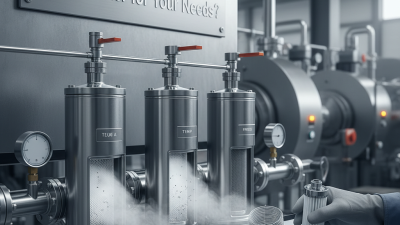
Picking the right Bacterial Filter? It's not just about going for the smallest pore size. There's a whole lot more to consider – like airflow, pressure drop, how well it holds back bacteria, moisture exposure, sterilization methods, and what the equipment is actually meant to do. A filter might work great in the lab, but it's a whole different story once you pop it into a real-world system like a ventilator, a sampling line, or even a fermentation setup. The compressed-air assembly? Yeah, that can throw you curveballs too.
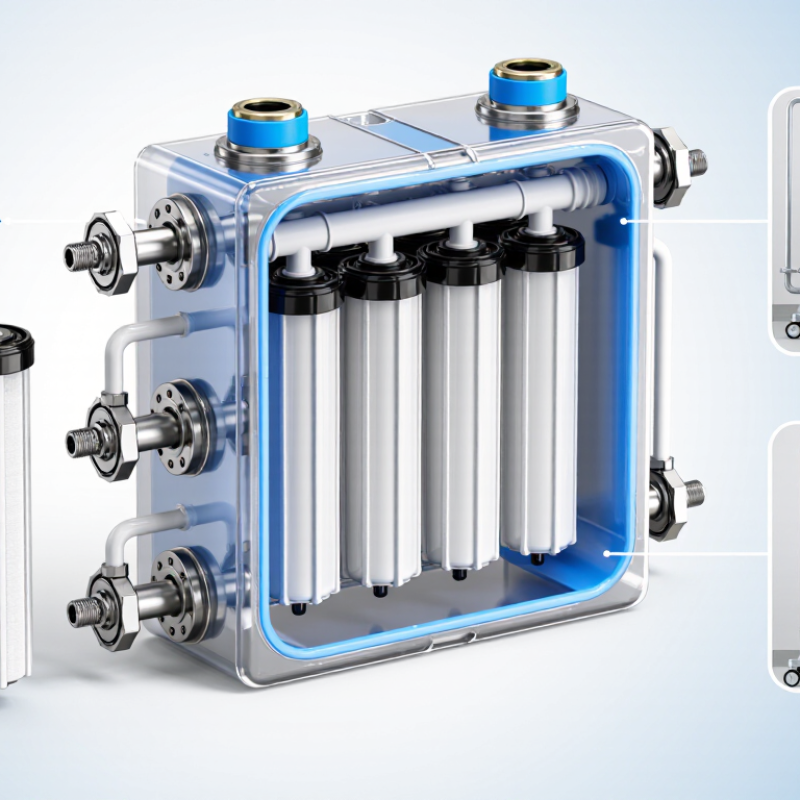
You know, Dr. David Ensor, who really knows his stuff when it comes to aerosol filtration, once said something that’s stuck with me: “A filter is part of a system, not an isolated component.” And honestly, that’s a point worth chewing on. It’s not just about the filter media itself—you’ve got to think about the whole setup: the housing, the seals, the connectors, and the conditions it’s working under. They all have to play nice together. Otherwise, all that impressive test data? It might just be giving you a false sense of security. That’s a real trap. Look, when you're checking out filters, you really want to see documented bacterial filtration efficiency, validated test methods, traceable quality records, and clear technical specs. Stick with the big names like Pall Corporation, 3M, or Camfil. Honestly, don't just trust the marketing hype — that's a trap.
And here's the thing, the little stuff can catch you off guard. I've seen instances where a wet filter creates this unexpected resistance, or a loose connection ends up sabotaging what's otherwise a great filter media. Plus, a high-efficiency model might just hike up your energy bills or drag down equipment performance. That trade-off? Super easy to miss unless you're paying close attention.
Let’s be honest—there’s no single 'best' filter out there. You have to balance the bacterial protection you need against flow rate, how long it’s supposed to last, how you’ll clean it, and what replacement management looks like. Sure, independent testing data can give you some confidence, but that doesn’t mean you can skip testing in your own specific conditions. Even the most experienced engineers can get blindsided by a practical limitation. So the responsible approach? It’s a constant loop of checking, questioning, and refining your entire filtration system—not just picking something off a shelf.
What a Bacterial Filter Is and What It Removes
A bacterial filter is a physical barrier designed to trap bacteria in air or fluid pathways. In respiratory equipment, it can reduce microbial transfer between a patient, caregiver, and device. Its performance is usually reported as bacterial filtration efficiency, or BFE. ISO 23328-1 evaluates breathing-system filters with controlled bacterial aerosols, but laboratory results do not perfectly copy a busy clinical room. Fit, moisture, airflow, and replacement timing can change protection.
It does not remove everything. Many bacterial filters do not reliably remove viruses, gases, odors, or dissolved chemicals. A filter marked with 99.9% efficiency also does not mean that 0.1% will pass in every situation. The CDC reports that about one in 31 hospitalized patients has a healthcare-associated infection on any given day. That figure supports careful filtration, but it cannot prove that one filter caused or prevented an infection. Review BFE, viral filtration efficiency, pressure drop, and compatibility before choosing a Ts Filter. A low pressure drop matters when breathing feels difficult.
Tips: Check the test standard, airflow rating, moisture tolerance, and service life. Inspect the filter after use. A damp, damaged, or heavily loaded filter needs attention. Do not judge performance by appearance alone. I have seen clear housings look clean while airflow becomes noticeably restricted. This is easy to miss. Follow the equipment maker’s replacement instructions, and confirm the filter suits the exact circuit or device.
How to Choose the Correct Pore Size
How to Choose the Right Bacterial Filter?
Pore size is the first decision, but it is not the whole answer. For many liquid applications, a 0.2 or 0.22 micrometre membrane is selected for bacterial retention. The FDA’s 2004 aseptic-processing guidance identifies these ratings as common choices for sterilizing filtration. A 0.45 micrometre filter usually supports clarification, not reliable sterilization. That difference matters.
Look beyond the number. “Nominal” and “absolute” pore ratings do not mean the same thing. ASTM F838 evaluates sterilizing-grade filters using Brevundimonas diminuta at a challenge level of about 10⁷ organisms per square centimetre. PDA Technical Report No. 26 also stresses bacterial retention testing, process pressure, and product compatibility. A filter may have the right pore size but fail after chemical exposure or excessive pressure.
For an Ink Filter, check the fluid’s viscosity and pigment load. Dense ink can slow flow and increase pressure across the membrane. Smaller pores may improve retention, yet they can clog sooner. I would test a 0.2 micrometre option first, then compare flow, pressure, and bacterial challenge results. It is not always that simple. Real samples often behave differently from laboratory liquids. Temperature, wetting quality, and housing design can change performance. Choosing by pore size alone is an easy mistake, and one worth questioning.
How to Choose the Right Bacterial Filter? - How to Choose the Correct Pore Size
| Nominal Pore Size |
Primary Function |
Typical Microbial Retention |
Suitable Applications |
Key Advantages |
Important Limitations |
| 5.0 µm |
Coarse particle removal and initial prefiltration |
Does not provide reliable bacterial retention |
Removing visible particles, protecting pumps, tubing, and downstream membrane filters |
High flow rate; low resistance; helps extend the life of finer filters |
Not suitable when bacterial control is required |
| 1.2 µm |
Fine prefiltration and bioburden reduction |
May reduce larger bacteria and particulates, but retention is not assured |
Process-water prefiltration, sample clarification, and protection of sterilizing-grade filters |
Good balance between flow and particle removal |
Should not be used alone for sterile filtration |
| 0.45 µm |
Clarification and analytical sample preparation |
Can remove many bacteria and larger particles, but some bacteria may pass through |
Removing suspended solids before analysis, HPLC sample preparation, and general clarification |
Higher throughput and lower pressure drop than smaller-pore membranes |
Not generally considered a sterilizing-grade pore size |
| 0.22–0.20 µm |
Sterilizing-grade bacterial filtration |
Designed and validated for retention of common vegetative bacteria under specified test conditions |
Sterile filtration of heat-sensitive aqueous solutions, buffers, media, and gases |
Standard choice for routine bacterial removal when the filter is properly validated |
Does not remove all viruses, endotoxins, or dissolved chemicals; performance depends on the membrane, process, and challenge organism |
| 0.10 µm |
Enhanced microbial and mycoplasma reduction |
Greater retention of very small bacteria and mycoplasmas than 0.20–0.22 µm filters, when specifically validated |
Applications requiring additional microbial control or specialized mycoplasma reduction |
Higher removal capability for organisms that may challenge conventional sterilizing-grade filters |
Lower flow rate and higher pressure drop are common; it is not automatically a complete virus-removal solution |
|
Selection note:
Choose the smallest pore size that meets the required retention target without creating an unacceptable pressure drop or product loss. Pore-size labels alone do not guarantee sterility: confirm the filter’s retention claim, membrane compatibility, operating pressure, temperature, fluid properties, and validation data for the intended process. A 0.45 µm filter is generally for clarification, while a properly validated 0.20–0.22 µm filter is the common starting point for bacterial sterilizing filtration.
|
How to Check Compatibility, Sterility, and Certification
How to Choose the Right Bacterial Filter?
Compatibility should be checked before performance claims. Match the filter material with the liquid, gas, temperature, and pressure. Some solvents can weaken membranes or housing materials. Confirm the pore rating, flow direction, and maximum operating pressure. Inspect the connectors too. A perfect membrane is useless if the fitting leaks. In practice, I record the filter size, fluid type, pressure, and exposure time before ordering. This simple record prevents avoidable mistakes.
Sterility requires more than sealed packaging. Check the sterilization method and confirm that it suits the intended application. Review the expiry date, lot number, package seal, and storage conditions. A damaged pouch is a warning. Do not use it. For critical work, request sterility validation data and confirm whether the filter is supplied sterile or must be sterilized onsite. I have seen teams assume “sterile” meant “safe for every process.” That assumption needs challenging.
Certification should be traceable and current. Ask for a certificate of conformity, material information, test results, and relevant quality-system documentation. Check whether the documents cover the exact filter model and lot, not merely a similar product. Certification supports confidence, but it does not replace compatibility testing. Run a small, controlled trial when the fluid, pressure, or temperature is unfamiliar. Record pressure changes, flow stability, and any visible damage. The process may reveal a problem that paperwork misses.
How to Choose the Right Bacterial Filter?
Compare common membrane pore ratings, then confirm material compatibility, validated sterility, and applicable certification requirements before selection.
A 0.45 µm membrane is commonly used for clarification and prefiltration, while 0.2–0.22 µm membranes are widely used for sterilizing-grade liquid filtration when the process has been properly validated. Smaller ratings, such as 0.1 µm, may be considered for specialized microorganism-control applications. Pore size alone does not prove bacterial retention: always verify chemical compatibility, pressure and temperature limits, extractables, validated bacterial-retention data, sterility assurance, and relevant quality-system or regulatory documentation.
Pharmaceutical Filtration Market Outlook—Grand View Research & MarketsandMarkets: JNSB Series K68 Capsule Filter
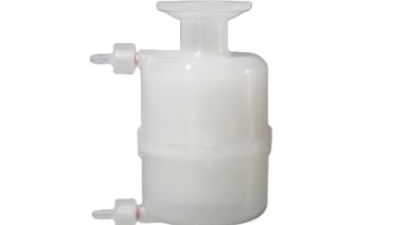
The pharmaceutical filtration market is expanding as manufacturers invest in contamination control, process reliability, and increasingly demanding sterile production environments. Recent market research reports estimate that the sector will continue growing at a high-single-digit to low-double-digit compound annual growth rate through the next decade, driven by biologics, injectable medicines, and stricter quality requirements. Within this landscape, the JNSB Series K68 Capsule Filter is designed for dependable filtration of volatile gases and low-flow liquids, where stable flow control and minimal internal hold-up are essential.
Constructed from flexible polypropylene using thermal fusion bonding, the filter cage provides high-temperature resistance, excellent mechanical strength, and broad chemical compatibility. Users can select from multiple membrane materials and connection configurations to match different process conditions. Each unit is integrity tested and rinsed with pure water to reduce the risk of medium shedding, while the integrated exhaust port helps release trapped air and minimize internal residue. These features support safer handling, simpler operation, and lower contamination risk in pharmaceutical, laboratory, and other controlled manufacturing applications. Industry analyses also identify single-use filtration, compact process equipment, and improved validation efficiency as important purchasing priorities, making a low-residue capsule design well suited to modern low-volume purification workflows.
Conclusion
Choosing the right Bacterial Filter begins with understanding what it is designed to remove, such as bacteria, microorganisms, and particulate contaminants from air or liquids. Start by identifying your filtration requirements, including the application environment, contamination risks, required level of protection, and whether the filter will be used once or repeatedly. These factors help determine the most suitable filter structure and material.
When comparing options, consider pore size, flow rate, pressure limits, and overall operating conditions. A smaller pore size may provide stronger retention, but it can also reduce flow and increase pressure requirements. The filter material should be compatible with the fluid, gas, temperature, and cleaning process involved. Finally, verify compatibility with connected equipment, confirm sterility requirements, and review relevant quality certifications. By evaluating these factors together, you can select a reliable filter that provides effective bacterial control while maintaining safe, efficient, and consistent performance.