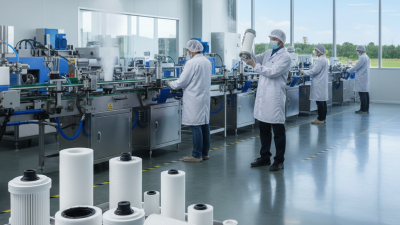
Picking a reliable Metal Filters manufacturer isn’t just about flipping through catalogs and comparing pictures. There’s a bit more to it—things like checking the material grades, pore uniformity, pressure ratings, weld quality, and how good their after-sales support is. Just because a filter looks super precise in a photo doesn’t mean it’ll hold up after repeated hot cycles or chemical cleaning. Those small details? They really do matter.
Dr. Richard Wakeman, a well-respected guy in filtration research, summed it up nicely: “Filtration isn’t just about choosing a product, it’s about how you design the process.” That totally rings true when evaluating suppliers. The best manufacturer for you depends on factors like fluid viscosity, particle size, temperature, flow rate, and how much maintenance you’re willing to do. For example, a stainless steel sintered filter might be perfect for a high-temp gas line, but a woven metal mesh might work better if you’re dealing with food processing. Neither is automatically better—it's all about what suits your specific needs.
In this guide, I’ve listed ten metal filter manufacturers that serve international buyers: Mott Corporation, Porvair Filtration Group, Pall Corporation, Parker Hannifin, Amazon Filters, GKN Powder Metallurgy, Sintered Specialties, Filson Filters, Hengko Technology, and Baoji Hanz Metal Material. These companies vary quite a bit in how big they are, how much they can customize, their certifications, and how they serve different regions. Some are pretty open with detailed technical info on their websites, while others prefer direct chats—so be prepared for a bit of back-and-forth, which can slow things down a bit.
When choosing a supplier, it’s good to consider their experience in manufacturing, quality controls, know-how about different applications, export readiness, and how well they communicate. Don’t just rely on the brand’s reputation as a sign they’re the right fit—it’s not always enough. And keep in mind that technical datasheets might not answer all your questions, so don’t hesitate to ask for samples, detailed drawings, test reports, and clear terms for replacement before you commit. At the end of the day, doing some practical checks is absolutely essential.
China’s metal filter manufacturing sector attracted strong global attention during 2024. Buyers sought stable supply, tighter filtration, and shorter replacement cycles. Demand remained active in water treatment, food processing, chemicals, and industrial gas systems. Mesh Metal Filters offered durable performance where plastic elements softened, cracked, or absorbed contaminants.
Material selection depends on temperature, corrosion, pressure, and cleaning methods. Stainless steel suits many wet environments and repeated backwashing. Nickel alloys can handle harsher chemical exposure, but costs rise quickly. Sintered metal supports rigid shapes and controlled pore structures. A 5-micron rating does not always mean identical results. Nominal ratings allow some particles through, while absolute ratings promise stricter capture under defined tests. This difference can affect pump protection and product quality.
Tips: Ask for material certificates, pore-size data, pressure-drop curves, and batch traceability. Check whether ratings use liquid or gas testing. Inspect welds, seals, and surface finish before installation. In field checks, I have seen excellent laboratory figures fail because operators selected the wrong flow rate. That is easy to overlook. Suppliers should also explain cleaning limits, service temperature, and expected replacement intervals. A low purchase price may hide frequent maintenance, although a premium filter is not automatically better. Review test conditions carefully, and compare them with the actual fluid, pressure, and contamination load.
China Top 10 Metal Filter Manufacturers for Global Buyers
To rank China’s top 10 metal filter manufacturers, we use evidence rather than showroom claims. Production capacity is checked through facility size, equipment counts, staffing, and monthly output records. A factory operating several forming, welding, and testing lines may offer stronger supply continuity. Capacity alone can mislead, though. Large equipment may remain idle, and published figures may lack current verification.
ISO certification is reviewed by checking certificate validity, issuing bodies, covered processes, and audit dates. A certificate matters only when factory procedures match daily production. Export performance adds another practical measure. We examine shipment frequency, destination diversity, product categories, and repeat-order patterns. Customs data can contain gaps, so it should support factory audits, not replace them. No ranking is perfect; changing orders and market conditions can alter results.
Tips: Ask for recent production records, not estimates. Request an ISO certificate copy and confirm its scope. Review sample inspection reports, packaging photos, and lead-time history. A small trial order can reveal welding consistency, mesh accuracy, surface finish, and communication speed. Keep questions specific. Vague answers deserve a second check.
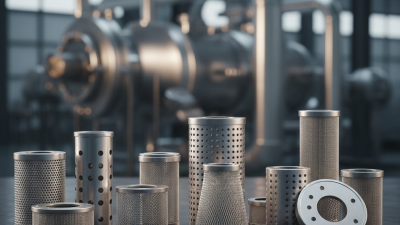
Metal filter selection depends on particles, pressure, temperature, and cleaning cycles. Sintered filters suit rigid, high-temperature applications. Woven mesh provides predictable openings and easy visual inspection. Porous metal filters offer deep filtration and strong structural support. Etched filters deliver precise apertures for delicate separation tasks.
MarketsandMarkets’ 2023 industrial filtration analysis valued the sector near USD 35.2 billion. It projects approximately USD 49.2 billion by 2028. This growth reflects stricter process controls and longer equipment-life requirements. Buyers seeking 1μm Metal Filters should verify whether the rating is nominal or absolute. The difference can change real performance. ISO 2942 supports filter integrity testing, while ISO 16889 helps evaluate hydraulic filtration efficiency. A supplier’s test method matters as much as the advertised pore size.
Tips: Request material certificates, pressure-drop curves, and batch inspection records. Compare stainless steel grade, weld quality, and cleaning compatibility. Ask for samples under actual fluid conditions. Small tests reveal unexpected fouling. In practice, no filter is perfect. A finer pore may improve capture but restrict flow. A woven element may clean easily yet miss irregular particles. I have seen specifications look impressive until temperature, viscosity, and backwashing were tested together. Reliable manufacturers explain these trade-offs clearly and document their results.
Comparing China’s leading metal filter manufacturers requires more than reading a micron number. Pore size describes the openings, while micron rating indicates expected particle retention. These values are not always identical. A filter rated at 10 microns may use nominal or absolute testing, producing very different results. Sintered mesh, powder, and metal fiber designs also behave differently under pressure.
Flow rate depends on pore structure, filter area, fluid viscosity, and pressure drop. For example, a larger cylindrical element may pass more water without increasing pore size. Oil, gas, and high-temperature liquids need separate calculations. Pressure limits depend on material thickness, weld quality, support structure, and operating temperature. A compact element may survive a short pressure spike but fail during continuous cycling. That detail is easy to miss.
Tips: Ask for test conditions, not just catalog ratings. Request the media type, absolute or nominal rating, initial pressure drop, flow medium, and maximum working pressure. Check whether data comes from a tested sample or a general estimate. A neat micron number can still mislead. In procurement reviews, teams sometimes prioritize flow rate and overlook cleaning methods. That choice may reduce service life. Leave a safety margin, then verify performance with a sample under real operating conditions.
For global buyers, China’s metal filter manufacturers should be judged by evidence, not attractive catalog photographs. ISO 9001 certification indicates controlled processes, but it does not automatically prove filtration performance. Buyers should request current certificates, material traceability, inspection records, and documented corrective actions. Details matter.
ASTM testing can clarify pressure drop, particle retention, tensile strength, and corrosion resistance. The selected method must match the filter’s real application. A laboratory result may look impressive, yet it can mislead if the test medium differs from factory conditions. Ask for sample reports, test temperatures, pore-size tolerances, and acceptance limits. Independent verification is wise.
Cleanability directly affects operating cost and service life. Washable Metal Filters should tolerate repeated backwashing, ultrasonic cleaning, or controlled chemical washing when compatible with the alloy. Inspect welds, pleats, support structures, and sealing surfaces after each cycle. A filter that looks clean may still hold trapped particles inside its mesh. Service-life claims need cycle data, not optimistic estimates. In practice, maintenance records often reveal more than sales literature. No supplier is perfect. Even strong manufacturers may show inconsistent batches or incomplete documentation, so a pilot order and incoming inspection remain sensible safeguards.
| Rank | Anonymous Supplier Profile | ISO 9001 Quality System | Typical ASTM / ISO Test Evidence | Common Metal Media | Typical Rating | Cleanability | Typical Service Life* | Global Buyer Service Benchmark |
|---|---|---|---|---|---|---|---|---|
| 01 | Profile A — Precision Woven Mesh Specialist |
Commonly available Certificate to be verified |
ASTM E11 mesh aperture; ASTM A580/A580M stainless wire; dimensional inspection and pressure-drop records | 304, 316, and 316L stainless steel woven wire | 20–500 µm | Backwash, air blowback, ultrasonic | 1–5 years | Sample approval, mesh certificates, export packing, and English technical documentation |
| 02 | Profile B — Sintered Porous Metal Producer |
Commonly available Certificate to be verified |
ASTM B212 density testing; bubble-point testing; permeability, porosity, and weld inspection reports | 316L stainless steel powder; nickel alloys; bronze | 0.5–100 µm | Backwash, reverse flow, solvent, ultrasonic | 2–10 years | Material traceability, custom porosity control, dimensional drawings, and application engineering |
| 03 | Profile C — Pleated Metal Cartridge Manufacturer |
Commonly available Certificate to be verified |
ASTM F316 bubble-point method; ISO 2942 filter integrity concepts; weld and leak testing | 316L mesh, sintered felt, perforated support tube | 1–200 µm | Backwash and chemical cleaning | 6–36 months | Replacement compatibility, standard end caps, pilot testing, and cartridge cross-reference support |
| 04 | Profile D — High-Temperature Gas Filter Supplier |
Commonly available Certificate to be verified |
ASTM A967/A967M passivation where applicable; tensile, weld, thermal-cycle, and leak testing | 310S, 316L, Inconel-type nickel alloys, stainless sintered felt | 5–100 µm | Pulse jet, reverse gas, thermal cleaning | 1–5 years | Temperature limits, alloy verification, installation drawings, and field troubleshooting |
| 05 | Profile E — Hydraulic and Lubrication Filter Specialist |
Commonly available Certificate to be verified |
ISO 16889 multi-pass testing when claimed; ISO 2941 collapse testing; pressure and bypass testing | Stainless wire mesh, sintered bronze, stainless fiber felt | 3–80 µm | Solvent wash, backflush, ultrasonic | 1–3 years | Beta-ratio data, collapse rating, OEM dimensional matching, and batch inspection reports |
| 06 | Profile F — Food and Pharmaceutical Filter Fabricator |
Commonly available Certificate to be verified |
ASTM A967/A967M passivation; surface-finish inspection; weld integrity and cleanability validation | 316L stainless steel, electropolished mesh, sintered metal | 1–150 µm | CIP, SIP, steam, ultrasonic | 1–5 years | Surface-finish options, hygienic welds, material certificates, and cleaning-cycle guidance |
| 07 | Profile G — Petrochemical and Process Filter Supplier |
Commonly available Certificate to be verified |
ASTM A240/A240M material verification; hydrostatic, pneumatic, weld NDT, and differential-pressure testing | 316L, duplex stainless steel, nickel alloys, wedge wire | 25–2,000 µm | Backwash, scraping, chemical cleaning | 3–10 years | Pressure-vessel documentation, welding procedure records, corrosion consultation, and spare-part planning |
| 08 | Profile H — Water and Wastewater Screen Manufacturer |
Commonly available Certificate to be verified |
ASTM E11 mesh verification; corrosion-resistance checks; flow-capacity and structural-load testing | 304/316 stainless mesh, wedge wire, perforated plate | 100–5,000 µm | Spray wash, backwash, mechanical cleaning | 3–12 years | Flow-rate calculations, corrosion advice, replacement panels, and installation support |
| 09 | Profile I — Aerospace and High-Alloy Filter Fabricator |
Commonly available Certificate to be verified |
ASTM E8/E8M tensile testing where applicable; alloy chemistry, dimensional, weld, and fatigue documentation | Inconel-type alloys, Hastelloy-type alloys, titanium, 316L | 5–200 µm | Ultrasonic, solvent, controlled thermal cleaning | 2–10 years | Full material traceability, controlled production records, first-article inspection, and technical audits |
| 10 | Profile J — Custom OEM Filter Assembly Supplier |
Commonly available Certificate to be verified |
Material certificates; dimensional inspection; pressure, leak, flow, and application-specific validation testing | 304/316 stainless steel, nickel alloys, sintered metal, multilayer mesh | 10–1,000 µm | Application-dependent; backwash or chemical cleaning | 1–8 years | Prototype development, private-label production, drawing review, and low-to-medium volume customization |
For global buyers, a Top 10 metal filter comparison should begin with evidence, not catalogue claims. MarketsandMarkets projected the industrial filtration market to grow from about USD 33 billion in 2023 to more than USD 47 billion by 2028. This growth reflects stricter process control and higher demand for durable filtration systems.
Price depends on alloy, pore size, shape, and testing. As a practical RFQ guide, standard stainless-steel elements may cost hundreds of dollars, while complex Titanium Metal Filters can reach several thousand dollars. Treat these figures cautiously. A drawing, material certificate, and test requirement can change the quotation quickly. Lead times often range from four to twelve weeks. Custom tooling may add several weeks.
Ask suppliers for ISO 9001 evidence, full material traceability, dimensional reports, and pressure or bubble-point test records. Food, pharmaceutical, and water applications may require additional regional compliance, such as FDA-related material declarations or EU contact rules. Certification alone proves little without batch documentation. It is worth checking welding quality under magnification. Small defects matter.
Application fit should guide the shortlist. Titanium suits corrosive liquids and demanding temperature conditions, but it may be unnecessary for ordinary air filtration. Compare filtration rating, operating pressure, cleaning method, service life, and replacement access. A lower purchase price can hide frequent cleaning or difficult maintenance. This is where many buyer evaluations remain incomplete.
This chart presents indicative manufacturing lead-time ranges commonly used by global buyers when comparing metal filter categories. Actual lead times vary according to filter dimensions, filtration rating, alloy, quantity, tooling, testing, and export requirements. The figures are category-level benchmarks and do not represent any specific manufacturer or brand.
Venting syringe filters with hydrophobic membranes are designed to support reliable air and gas filtration during sample preparation and process handling. Unlike liquid-filtering membranes, hydrophobic materials help resist moisture penetration while allowing air to pass through efficiently. They are commonly used for venting bioreactors, fermentation tanks, storage vessels, and carboys, helping reduce the risk of particulate or microorganism ingress without unnecessarily restricting airflow.
When selecting a vent filter, begin by matching its airflow capacity to the requirements of the equipment. A filter with insufficient surface area may create excessive resistance, slow pressure equalization, or interfere with normal vessel operation. Retention performance is equally important: the membrane should provide an appropriate barrier against particles and microorganisms while maintaining stable gas transmission. Available designs may offer effective filtration areas of up to 17.20 cm², providing flexibility for systems with different ventilation demands.
For dependable performance, install the filter in the correct flow direction when specified, keep connections secure, and protect the membrane from direct contact with liquids or condensate. Before use, inspect the housing and seals for damage, and replace the filter if it becomes wet, blocked, or visibly compromised. Selecting the right membrane, surface area, and connection format can improve process consistency and support cleaner, more reliable sample preparation.
Review factory size, equipment, staffing, monthly output, certifications, and export history. Ask for recent records, not estimates.
No. Large machines may remain idle. Compare operating lines, staffing levels, output records, and repeat orders.
Check validity, issuing body, covered processes, and audit date. Confirm that factory routines match the certificate scope. A certificate alone proves little.
Review shipment frequency, destinations, product categories, and repeat orders. Customs data may contain gaps. Use it alongside factory audits.
Sintered filters suit rigid, high-temperature uses. Woven mesh offers visible openings and easier cleaning. Porous metal supports deep filtration. Etched filters provide precise apertures.
Ask whether the rating is nominal or absolute. Request the test method and integrity records. Finer pores may capture more particles but reduce flow.
Request material certificates, batch traceability, dimensional reports, pressure-drop curves, and inspection records. Test samples with the actual fluid. Small trials reveal fouling.
Alloy, pore size, shape, testing, and tooling affect price. Standard elements may cost hundreds of dollars. Complex parts can cost several thousand.
Compare corrosion resistance, pressure, temperature, cleaning method, service life, and replacement access. A cheaper filter may require frequent maintenance. The evaluation is often incomplete.
This guide examines the China Metal Filters market from a global buyer’s perspective, covering 2024 demand trends, commonly used materials, and filtration ratings. It explains how leading manufacturers can be evaluated through production capacity, ISO certification, export experience, and technical consistency. The profiles compare sintered, woven, porous, and etched metal filter solutions, highlighting their typical strengths in durability, precision, chemical resistance, and adaptability to different industrial environments.
A practical technical comparison addresses pore sizes, micron ratings, flow rates, pressure limits, cleanability, and expected service life. The guide also outlines key quality benchmarks, including ISO 9001 systems, ASTM-based testing, traceability, and inspection procedures. For purchasing decisions, global buyers can use the final checklist to assess pricing, certifications, lead times, customization capability, and application fit, helping them select reliable Metal Filters that balance performance, maintenance needs, and long-term operating costs.