Choosing the Best China Filter Pods for Global Wholesale Buyers requires more than comparing factory prices. Buyers must examine filtration media, pod dimensions, airflow resistance, sealing quality, packaging, and batch consistency. A low quotation can hide costly replacements, unstable performance, or confusing specifications.
Dr. Bjarne Stenström, a respected filtration researcher, has emphasized, “Filtration performance depends on the whole system, not the filter alone.” This principle matters when evaluating Chinese suppliers such as Ningbo PureAir Technology and Shenzhen ClearFlow Manufacturing. Their Filter Pods may appear similar, yet their fiber density, adhesive coverage, and inspection methods can differ significantly. Request test reports, sample units, material declarations, and production photographs before approving a wholesale order. Small details matter. Sometimes, painfully.
Experienced buyers should also review minimum order quantities, lead times, carton protection, labeling accuracy, and communication speed. A reliable manufacturer should explain pressure-drop data in understandable terms. It should also accept reasonable quality checks before shipment. Certifications can support trust, but certificates alone cannot prove every production batch performs equally. That is where many purchasing plans become too optimistic.
The strongest Filter Pods supplier is not always the cheapest. It is the partner that documents performance, responds clearly, and improves when defects appear. Buyers should compare at least three factories and test samples under realistic operating conditions. A perfect supplier may not exist. Careful verification remains the safer advantage.
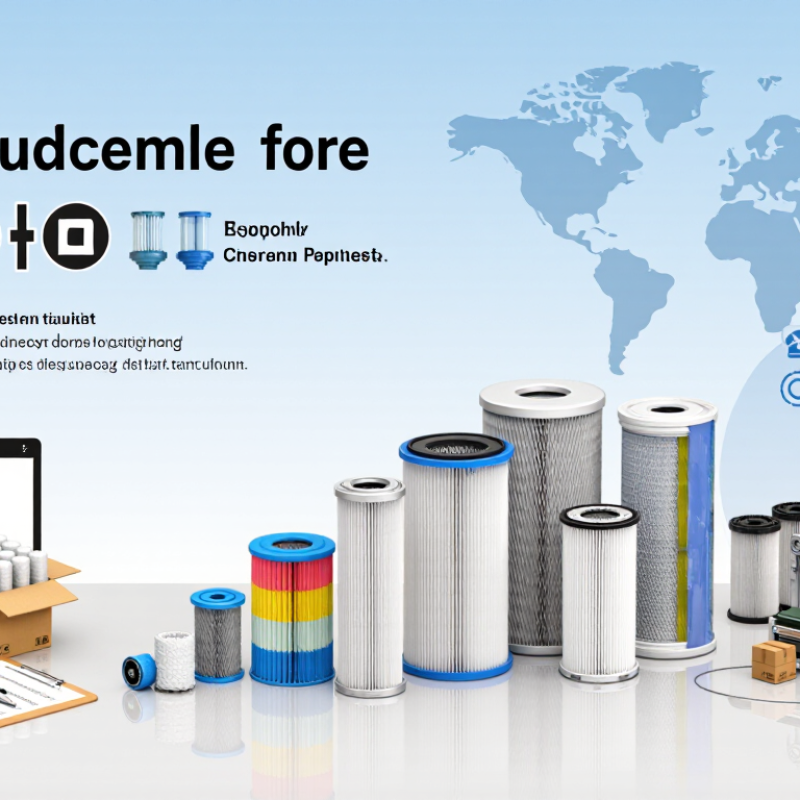
Define Filter Pods by Media, Rating, Capacity, and End-Use Standards
Best China Filter Pods for Global Wholesale Buyers?
For global wholesale buyers, a filter pod should be defined by evidence, not appearance. Start with the filter media. Melt-blown polypropylene handles sediment, while activated carbon reduces chlorine and odor. Membrane media target finer particles, but they can increase pressure loss. Each option needs a clear contaminant target.
Rating must show more than a micron number. A nominal rating captures most particles near the stated size. An absolute rating offers tighter control under tested conditions. Ask for test methods, sample records, and batch consistency. In procurement reviews, vague ratings often create costly replacements.
Small details matter.
Capacity includes flow rate, service life, and pressure limits. A pod rated for 10 liters per minute may perform differently with dirty water. Check inlet pressure, temperature, connection size, and replacement intervals.
End-use standards also change the decision. Potable water, food processing, laboratory work, and industrial cooling require different documentation.
Request material declarations, migration data, and performance reports where relevant. A Ts Filter supplier should provide traceable specifications instead of broad claims.
Keep the evaluation practical: compare a three-month operating estimate, inspect the housing seal, and test one sample before a large order. Real purchasing is less tidy. Field conditions can expose weaknesses that a clean factory test misses.
Map China’s Filter Pod Supply Base Using UN Comtrade Trade Data
Best China Filter Pods for Global Wholesale Buyers?
Map China’s Filter Pod Supply Base Using UN Comtrade Trade Data
UN Comtrade can help wholesale buyers understand China’s filter pod supply base before requesting quotations. Start by identifying the correct HS code. Filter pods may fall under different classifications based on material, function, or equipment use. A wrong code can distort the entire market picture.
Review China’s annual export value, quantity, and destination markets. Then calculate the approximate unit value. This figure is not a factory price. It may include different specifications, packaging, and shipment terms. Still, it can reveal useful patterns. A sharp rise in quantity with little value growth may indicate stronger price competition. Check several years, not one unusual season.
Look closely at major importing countries. Their demand can suggest production experience, documentation requirements, and common product formats. However, trade data does not identify dependable factories by itself. Use it to shortlist regions and supplier types, then verify manufacturing records, material certificates, batch controls, and sample consistency.
Details matter.
Buyers should compare customs data with supplier declarations. Some exporters may classify similar products differently. That creates noise. I would also question unusually low unit values, especially when the supplier claims advanced media or complex assemblies. The data is valuable, but imperfect. Treat it as a map, not proof. A careful sourcing process combines Comtrade trends, factory audits, technical testing, and clear purchase specifications.
Compare Filtration Performance Through ISO 16890 and NSF/ANSI Benchmarks
Best China Filter Pods for Global Wholesale Buyers?
For global buyers, filtration claims must match the correct testing system. ISO 16890 evaluates air filters by ePM1, ePM2.5, ePM10, and coarse particle efficiency. These categories reflect particle-size performance under standardized laboratory conditions. The World Health Organization’s 2021 guidelines set annual PM2.5 exposure at 5 µg/m³. That benchmark makes fine-particle control commercially important, especially in dense cities and industrial zones. Still, laboratory results do not perfectly predict field performance.
NSF/ANSI benchmarks address a different question. NSF/ANSI 42 covers aesthetic effects, such as chlorine taste and odor. NSF/ANSI 53 focuses on health-related contaminant reduction. NSF/ANSI 401 addresses selected emerging contaminants. These standards typically involve water filtration claims, flow rates, capacity, and contaminant-specific testing. They should not replace ISO 16890 data for air-filter products. A supplier showing only “99% filtration” provides too little evidence. Buyers should request the full test report, pressure-drop curve, airflow conditions, test dust, and production-batch controls. Real installations are messier. Seal leakage can reduce performance sharply.
Tips: Compare efficiency at the same airflow. Check pressure drop at the intended service point. Verify independent laboratory accreditation and certificate scope. Review replacement capacity, packaging durability, and traceability before approving bulk orders. I would also test samples after transport. Heat, moisture, and compression may change fit and resistance. A cheaper pod can become expensive when airflow falls early. Industry reports often emphasize energy use, yet procurement teams still underweight it. That is a gap worth challenging.
Best China Filter Pods for Global Wholesale Buyers: ISO 16890 and NSF/ANSI Benchmarks
ISO 16890 classification thresholds provide a comparable efficiency reference, while NSF/ANSI standards validate specific product claims rather than one universal efficiency percentage.
ISO ePM1
Requires at least 50% average efficiency for particles up to approximately 1 μm to qualify for the ePM1 classification.
ISO ePM2.5
Requires at least 50% average efficiency for the ISO-defined PM2.5 particle fraction.
NSF/ANSI Context
NSF/ANSI 42, 53, and 58 address specific reduction or treatment claims; they do not set one universal filtration-efficiency value for every filter pod.
Use the chart as a screening benchmark for wholesale specifications. Final purchasing decisions should verify the complete laboratory report, tested airflow, pressure drop, cartridge configuration, rated capacity, and the exact NSF/ANSI claim applicable to the product.
Assess Wholesale Costs with China Customs Prices and MOQ Structures
Best China Filter Pods for Global Wholesale Buyers?
Assessing wholesale costs starts with more than a factory quotation. For an Oil Filter, China customs prices can provide a useful reference point. They may show declared export values, packing details, and shipment patterns. However, customs data is not always the final commercial price. Product grade, material thickness, testing, and delivery terms can change the calculation. Check the HS classification carefully. Small errors may distort your comparison.
MOQ structures often reveal the real purchasing cost. A supplier may quote 500 units for standard packaging, while customized labels require 2,000 units. Ask for prices at 500, 1,000, and 5,000 units. Compare the unit price with tooling, cartons, inspection, and inland transport. The cheapest quote may become expensive after these additions. Request a written proforma invoice.
Sample testing matters. Hold one filter pod in your hand. Check the seal, media alignment, cap strength, and carton protection. A practical sample review can expose problems hidden in spreadsheets. I once underestimated repacking costs because the cartons arrived with weak corner protection. That mistake changed the landed cost. Build a small contingency allowance, perhaps 5–8%, while refining demand forecasts. Customs prices support negotiation, but verified specifications and transparent MOQ terms support reliable decisions.
Verify Factory Quality Through ISO 9001, Batch Tests, and Traceability
For global wholesale buyers,
a reliable China
Air Filter
supplier should prove quality beyond attractive samples. ISO 9001 certification shows that documented processes exist, but it does not replace factory verification. Check the certificate scope, issuing body, renewal date, and production site address. A certificate alone is not enough.
During a factory review, request batch test records for filtration efficiency, pressure drop, material strength, and dimensions. The tested sample should match the shipment, not a specially prepared sample. Ask for lot numbers, test dates, equipment details, and authorized signatures. Small details matter. Inspectors can also compare carton labels with production records and warehouse samples.
Traceability should follow each filter from raw media to final packing.
Suppliers should identify material batches, machine lines, operators, inspection points, and dispatch dates. This information helps locate defects quickly when thousands of units reach different markets. I once treated a clean sample as strong evidence, but later found inconsistent sealing on bulk goods. That mistake changed my inspection routine. Now I request random samples from separate cartons and review nonconformity reports. No factory process is perfect. A credible supplier admits limits, explains corrective actions, and shares updated records instead of hiding weak results.
Rank Suppliers by Lead Time, Export Markets, Warranty, and Compliance
Best China Filter Pods for Global Wholesale Buyers?
For wholesale buyers, “best” means predictable delivery, documented compliance, and stable after-sales support. A practical ranking starts with lead time. Tier A suppliers usually quote 7–15 days for stocked filter pods and 25–40 days for customized orders. Tier B suppliers often need 20–35 days for standard production. Tier C suppliers may offer lower prices, but delivery can exceed 45 days. That delay can empty a distributor’s warehouse quickly.
Export reach matters. Suppliers serving Europe, North America, Southeast Asia, and the Middle East usually understand labeling, packing, and inspection requirements better. UN Comtrade data for 2023 show China remains a major exporter across several filtration-equipment categories. However, HS codes combine different products, so buyers should not treat trade volume as proof of pod quality. Request shipment records, destination markets, and recent inspection documents.
Warranty terms separate serious manufacturers from traders. A useful benchmark is 12–24 months, supported by batch tracking and replacement procedures. Compliance should include material declarations, factory quality records, and relevant standards such as NSF/ANSI requirements for drinking-water contact, where applicable. ISO 9001 certification supports process control, but it does not guarantee filtration performance. Check the test report.
That ranking is imperfect. A fast supplier may lack deep export experience. A certified factory may still communicate poorly. Before placing a large order, test samples through an independent laboratory and verify the production batch, seal quality, flow rate, and packaging marks. Small details become expensive problems.
Select the Best China Filter Pods Using a Weighted Buyer Scorecard
Global wholesale buyers need more than a low quotation when selecting China filter pods. A weighted buyer scorecard makes hidden differences easier to measure. Start with filtration performance, assigning the highest weight to particle retention, flow stability, and pressure drop. Request test results using your actual liquid or Ink Filter application. A clean laboratory sample may perform differently in continuous production.
Give quality consistency a strong score. Check batch records, material certificates, dimensional tolerances, and inspection procedures. Ask how rejected units are isolated before packing. During supplier visits, inspect sealing surfaces, filter media, and carton protection. Small defects matter. One uneven seal can damage an entire production run.
Cost still matters, but calculate landed cost rather than unit price alone. Include tooling, packaging, freight, import handling, replacement rates, and expected lead time. Score minimum order quantity, payment terms, technical response time, and after-sales support separately. I would also test three production batches before approving a large order. That step adds time. It can expose unstable materials or changing pore structures. My scorecard would use weighted categories, such as performance at 30%, consistency at 25%, total cost at 20%, delivery at 15%, and service documentation at 10%. These weights are not universal. A buyer with strict downtime limits may need to adjust them. Be willing to revise the score after field testing. A spreadsheet cannot replace evidence from real operating conditions.
Best China Filter Pods for Global Wholesale Buyers? - Select the Best China Filter Pods Using a Weighted Buyer Scorecard
Anonymous supplier-profile comparison for wholesale sourcing and qualification.
Scoring method: Each criterion is rated from 1 to 5. Weighted score = Σ(score ÷ 5 × criterion weight). A higher score indicates stronger overall suitability for global wholesale purchasing.
Benchmark basis: Standard replacement filter pods, 10,000-unit annual purchasing scenario, FOB China comparison, excluding freight, duties, tooling and third-party testing fees.
Buyer verification checklist: Confirm current test reports, material declarations, production capacity, sample quality, packaging specifications, inspection procedures and final commercial terms before placing a purchase order.
4–5 Strong
3 Acceptable
1–2 Needs verification
FAQS
No. It shows documented quality processes exist. Check its scope, issuing body, renewal date, and production-site address. A certificate alone is not enough.
Request filtration efficiency, pressure drop, material strength, and dimensional test records. Confirm lot numbers, test dates, equipment details, and authorized signatures.
Ask for samples from the actual production batch. Compare test samples with shipment cartons and warehouse stock. Special samples can mislead.
It should identify raw-material batches, machine lines, operators, inspection points, and dispatch dates. Lot labels should match production records.
Select units from separate cartons. Check sealing surfaces, filter media, dimensions, and carton protection. Record defects with photographs and lot numbers.
Rejected units should be isolated and clearly labeled. Ask for nonconformity reports and corrective-action records. Weak records deserve caution.
Calculate landed cost, including tooling, packaging, freight, import handling, replacements, and lead time. Also score payment terms and technical response time.
Consider performance, consistency, total cost, delivery, and documentation. One practical weighting is 30%, 25%, 20%, 15%, and 10%.
Preferably not. Test three production batches when possible. This may reveal unstable materials, changing pore structures, or inconsistent sealing.
No. Field testing shows performance under actual conditions. Scorecard weights are not universal. Revise them when operating results disagree.
Conclusion
Choosing the best China Filter Pods for global wholesale purchasing requires more than comparing unit prices. Buyers should first define each product by filter media, efficiency rating, airflow capacity, dimensions, and intended end-use standards. A structured review of China’s supply base, supported by UN Comtrade trade data, can reveal export strength and product categories, while ISO 16890 and NSF/ANSI benchmarks help compare filtration performance objectively. Wholesale evaluation should also include customs-based price references, minimum order quantities, packaging, and shipping lead times.
Factory verification is equally important. Buyers should examine ISO 9001 systems, batch testing procedures, raw-material controls, inspection records, and product traceability. Suppliers can then be ranked according to delivery reliability, export experience, warranty terms, documentation, and regulatory compliance. Finally, a weighted buyer scorecard can balance quality, cost, capacity, service, and risk, allowing importers to select Filter Pods that meet technical requirements and support stable, long-term wholesale supply.