As we step into 2026, global buyers are raising their expectations for Filter Capsules. They’re really looking for things like reliable retention, clean processing, and performance they can count on. And honestly, choosing the right product now involves more than just pore size—that’s just the start. Factors like membrane chemistry, housing materials, connection types, sterilization methods, and operating pressures all come into play.
Dr. Andrew Zydney, a well-known researcher in membrane filtration from Penn State, sums it up nicely with a practical tip: “Choose the capsule based on your process, not the other way around.” That’s still super helpful when comparing materials like polypropylene, PES, PTFE, nylon, or glass fiber capsules. Each one reacts differently with solvents, proteins, gases, and cleaning cycles. Even tiny differences can impact flow rates, extractables, and batch consistency—so it’s not just about the initial price.
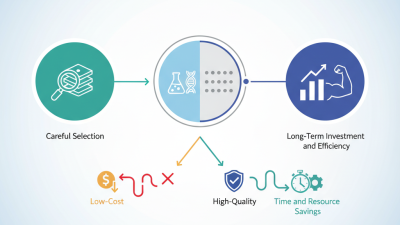
Looking ahead to 2026, the market offers all kinds of filter options—vent filters, liquid clarification capsules, sterilizing-grade units, depth-filter capsules, and high-area systems. Still, some buyers tend to focus too much on cost, but that can backfire. A cheaper capsule might need replacing sooner or could lead to extra validation headaches. And let’s be honest—there’s no one-size-fits-all solution for every facility. That’s something folks often overlook.
This guide dives into the main types of Filter Capsules used across pharma, biotech, food, beverage, chemical, and lab applications. It covers the nitty-gritty details like inlet design, packaging, documentation, and what support you can expect from suppliers. Just a heads-up: don’t rely only on technical specs or marketing claims. Always do proper process trials because performance can change depending on temperature, viscosity, pressure, and even how your actual process runs. Different experiences are normal, so thorough testing before you commit to large-scale purchases is absolutely essential.
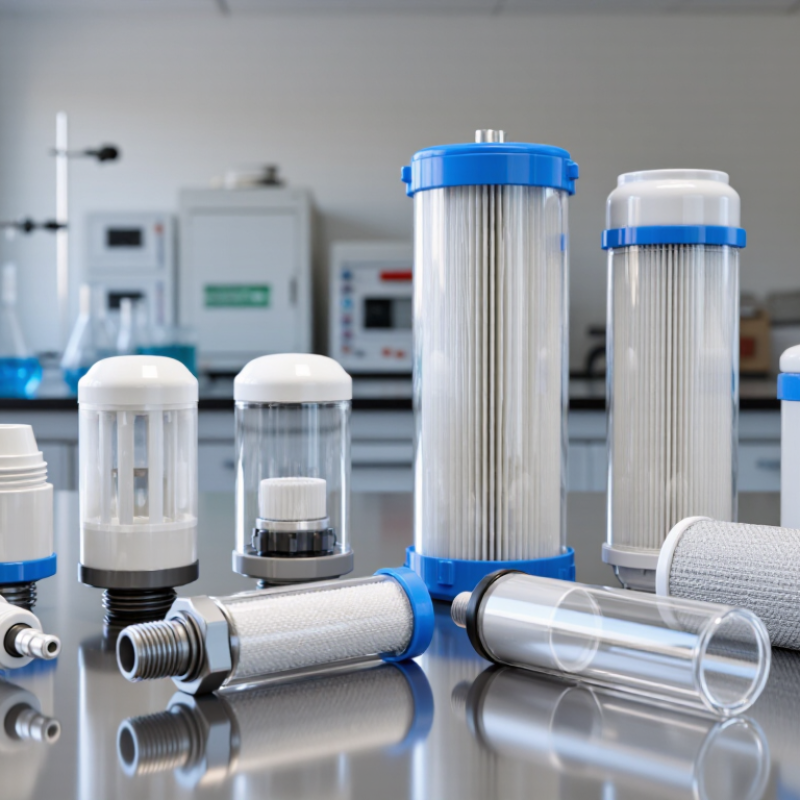
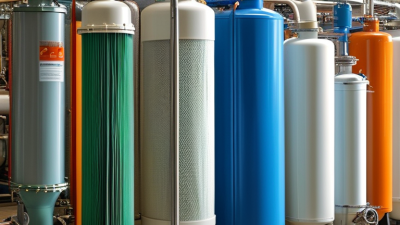
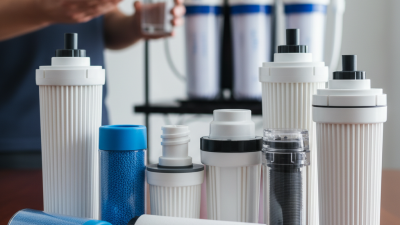
Filter capsules are compact, enclosed filtration units designed for controlled liquid or gas processing. They combine a filter membrane, support layers, and a protective housing. Unlike open filter sheets, capsules reduce handling and exposure during installation.
Their operation is straightforward. Fluid enters through an inlet and moves across the membrane. Particles remain on the upstream surface, while filtered fluid exits through the outlet.
The membrane may separate bacteria, fine particles, or larger contaminants, depending on its pore rating. Pressure gauges help operators monitor loading. A sudden pressure increase often signals blockage.
Common 2026 options include liquid clarification capsules, sterilizing-grade capsules, gas and vent capsules, and capsule systems for small-volume batches. Medical Filter Capsules require careful material selection, validated performance data, and documented integrity testing. Users should check flow rate, pressure limits, chemical compatibility, and temperature resistance before purchase.
Details matter. A capsule that performs well with water may react poorly with solvents or viscous fluids. Installation errors can also create leaks around connections. I have found that specification sheets rarely answer every practical question. Pilot testing remains valuable, especially when process conditions change. Even a high-quality capsule cannot compensate for poor maintenance or an unsuitable pore size.
In 2026, filter capsules mainly fall into membrane, depth, activated-carbon, vent, and single-use categories. Each type solves a different process problem. Membrane capsules provide defined pore sizes, commonly 0.2 or 0.45 micrometres, for bioburden reduction and sterile filtration. Depth capsules capture particles throughout a thicker media structure. They suit turbid liquids and high-solid feed streams.
Activated-carbon capsules remove chlorine, odors, and selected organic compounds from process water. Vent and gas capsules usually use hydrophobic membranes, protecting tanks and containers while allowing pressure equalization. Single-use capsules reduce cleaning requirements and cross-contamination risks. They are increasingly used in flexible pharmaceutical processing. MarketsandMarkets reported strong double-digit growth for the pharmaceutical filtration market through 2028, driven partly by biologics and disposable systems.
Material choice matters. Polyethersulfone supports many aqueous pharmaceutical applications, while polytetrafluoroethylene is common for aggressive gases and solvents. Polypropylene depth media can handle higher particle loading, but it may not replace a final membrane filter.
Check extractables, pressure limits, flow rate, and compatibility before purchasing. A 2024 Grand View Research report identified membrane filtration as a major global growth segment through 2030. The figures are useful, though market reports vary by scope and methodology. That detail deserves caution. In field evaluations, operators should also test capsule integrity, hold-up volume, and actual throughput using the intended fluid, not clean water alone. Small differences become expensive at scale.
2026 Top Filter Capsules Types for Global Buyers
Membrane material determines more than chemical compatibility. Hydrophilic polyethersulfone supports fast water-based processing and low extractables. Polyvinylidene fluoride offers strong mechanical resistance, but its natural hydrophobicity can slow wetting. Polytetrafluoroethylene suits gases and aggressive solvents. Nylon remains useful for selected aqueous applications, though adsorption requires careful testing. My practical warning is simple: a familiar material is not automatically the correct material.
Filtration ratings need closer inspection. A nominal rating estimates particle removal under stated conditions. An absolute rating should show validated retention at a defined challenge size. A 0.22 Micron Filter Capsules product is commonly selected for sterilizing-grade liquid filtration, but 0.22 microns alone proves little. ASTM F838 testing uses a Brevundimonas diminuta challenge of at least 10⁷ organisms per square centimetre. The result depends on pressure, temperature, membrane structure, and test fluid.
ISO 29463 also separates efficiency testing from simple pore-size claims. Industry guidance repeatedly recommends reviewing bacterial-retention data, flow curves, pressure limits, and extractables together. MarketsandMarkets’ 2024 membrane filtration analysis identifies pharmaceutical processing as a major demand segment, reflecting tighter validation expectations. Buyers should request lot-specific certificates and compare wetting procedures. This is often missed. A capsule may pass a clean-water test yet perform poorly with proteins, solvents, or viscous feeds. Testing the real process remains the more reliable choice.
Filter capsules should match the fluid before the industry. Water systems often use hydrophilic membranes for quick wetting and stable flow. Solvent service needs stronger chemical resistance, commonly from PTFE or compatible fluoropolymer materials. Oil filtration requires attention to viscosity, temperature, and pressure drop. A capsule that works well with water may clog quickly in thick process oil.
Industry conditions change the selection. Food and beverage plants usually prioritize cleanability, traceability, and low extractables. Pharmaceutical processing demands validated materials, sterile connections, and controlled microbial retention. Electronics manufacturing needs extremely clean filtration for ultrapure water and sensitive chemicals. Chemical facilities may require reinforced housings for aggressive fluids. Check the fluid temperature carefully. Heat changes both membrane strength and flow performance.
Buyers should compare flow rate, differential pressure, effective area, connector design, and sterilization method. A small capsule may fit the line but create excessive pressure loss during peak production. In real installations, operators sometimes select a finer membrane than necessary. That choice can improve retention, yet shorten service life and increase replacement costs.
2026 Top Filter Capsules Types for Global Buyers
Global buyers should compare Filtration Capsules by performance, not appearance. Membrane capsules suit final clarification and bioburden control. Depth capsules handle heavier particle loads before membrane filtration. Vent capsules protect tanks and lines from airborne contamination. According to Grand View Research’s 2024 analysis, the global membrane filtration market exceeded USD 9 billion in 2023. This growth increases product choice, but also complicates technical screening.
Retention rating is only one factor. Buyers should review flow rate, differential pressure, effective filtration area, and material compatibility. A capsule that delivers high retention may clog quickly in a viscous process. A practical test should record pressure at startup, midpoint, and the end of the batch. ISO 16889 principles can support consistent particle-removal comparisons. However, laboratory results may not match factory conditions. That gap deserves attention.
Extractables, leachables, sterilization method, and integrity-test results affect global qualification. Pharmaceutical and food processors should request lot traceability, certificates, and defined acceptance limits. The WHO and UNICEF Joint Monitoring Programme reported that 2.2 billion people lacked safely managed drinking water in 2022. This figure reinforces the need for dependable filtration infrastructure, especially where replacement supply is slow. Buyers should also check regional storage conditions, connector standards, and disposal requirements. Small omissions become expensive delays.
| Filter Capsule Type | Typical Filter Media and Configuration | Common Pore or Particle Rating | Typical Retention Performance | Typical Recommended Differential Pressure | Typical Temperature Range | Relative Throughput and Dirt-Holding Capacity | Typical Global Applications | Key Purchasing Factor |
|---|---|---|---|---|---|---|---|---|
| Polypropylene Depth Capsule | Graded polypropylene depth layers with a large internal contaminant-holding area. | 1–100 µm nominal | Approximately 85–99% nominal retention, depending on grade, particle size, and test method. | Usually 2–5 bar maximum differential pressure; verify the capsule assembly rating. | Typically 60–80°C for aqueous service; lower limits may apply to the seal material. | High dirt-holding capacity; suitable for fluids with moderate to heavy particle loading. | Pre-filtration, process water, chemicals, coatings, inks, and protection of finer membrane filters. | Particle-load profile, pressure drop, and total filtration cost. |
| Pleated PES Membrane Capsule | Hydrophilic polyethersulfone membrane with a pleated surface area. | 0.1–0.45 µm absolute or validated grade | High microorganism retention is achievable with a validated 0.2 µm sterilizing-grade design; performance must be confirmed by test data. | Commonly 3–5 bar maximum differential pressure, depending on product design and temperature. | Typically 40–80°C for aqueous processes; steam-in-place limits vary by construction. | High flow for water-based liquids; moderate dirt-holding capacity compared with depth media. | Bioprocessing, pharmaceutical water, beverage clarification, buffer filtration, and final liquid filtration. | Validated bacterial retention, integrity-test compatibility, and low extractables. |
| PVDF Membrane Capsule | Hydrophilic polyvinylidene fluoride membrane, commonly selected for low protein binding. | 0.1–0.65 µm absolute or nominal, depending on grade | High particle and microorganism retention is available in fine-pore grades; validation is application-specific. | Usually 3–5 bar maximum differential pressure under ambient conditions. | Typically 60–90°C for aqueous service; chemical and thermal limits depend on the capsule housing. | High flow with low adsorption in many biological and aqueous applications. | Biological solutions, diagnostics, laboratory fluids, and low-protein-binding liquid filtration. | Protein recovery, chemical compatibility, and membrane wetting behavior. |
| Nylon 6,6 Membrane Capsule | Hydrophilic nylon membrane with strong mechanical strength and broad aqueous compatibility. | 0.1–0.45 µm absolute or nominal | Fine-pore grades can provide high bacterial and particle retention when properly validated. | Generally 3–5 bar maximum differential pressure, subject to temperature derating. | Typically 60–80°C for aqueous applications. | Moderate to high flow; good balance between strength, wetting, and filtration precision. | Water-based chemicals, laboratory solutions, cosmetics, inks, and general process liquids. | pH range, solvent compatibility, extractables, and adsorption sensitivity. |
| PTFE Membrane Capsule | Hydrophobic polytetrafluoroethylene membrane, often supported by a porous backing layer. | 0.1–1.0 µm typical vent or gas grade | High aerosol and particle retention; liquid filtration requires pre-wetting or a compatible low-surface-tension fluid. | Typically 2–5 bar differential pressure for gas or vent service. | Approximately 80–120°C in many designs; housing and seal materials may reduce the limit. | High gas permeability; low liquid flow unless the membrane is properly wetted. | Tank venting, sterile air, compressed-gas filtration, solvents, and aggressive chemicals. | Hydrophobicity, chemical compatibility, gas-flow rate, and aerosol retention. |
| Glass Fiber Depth Capsule | Borosilicate glass-fiber depth media with high void volume and strong particle-loading capability. | 0.7–5 µm nominal | High removal of suspended solids; retention is generally nominal rather than absolute. | Often 2–4 bar maximum differential pressure, depending on capsule construction. | Commonly 80–120°C for suitable capsule designs. | Very high dirt-holding capacity and good performance with highly loaded fluids. | Pre-filtration, laboratory samples, paints, pigments, oils, and particle-heavy process streams. | Fiber shedding control, wet strength, and compatibility with the process fluid. |
| Activated Carbon Capsule | Granular or carbon-block media designed for adsorption rather than simple particle removal. | Usually 5–20 µm nominal outer filtration | Can reduce chlorine, taste, odor, and selected organic compounds; capacity varies greatly by contaminant and water chemistry. | Usually 2–4 bar maximum differential pressure. | Typically 60–80°C; adsorption efficiency may decline as temperature increases. | Moderate flow; contaminant capacity is finite and determined by carbon type, bed volume, and contact time. | Water treatment, dechlorination, odor control, solvent polishing, and protection of sensitive downstream membranes. | Adsorption capacity, empty-bed contact time, pressure drop, and replacement interval. |
Global buyers compare filter capsules by use, not appearance. Common options include depth, membrane, vent, and inline capsules. A Ts Filter specification should state media, pore size, housing material, connections, and flow rate. For liquid processing, pore ratings and material compatibility deserve special attention. Gas or vent applications require different validation. A polished datasheet is helpful. It is not proof of performance.
International purchasing teams should request evidence tied to the intended use. ISO 9001 supports quality management, while food-contact or pharmaceutical requirements may also apply. Do not treat one certificate as universal approval. Ask for batch records, test methods, extractables data, and a certificate of analysis. Sterilization claims need process details. Practical experience shows that compliance checks often happen too late. That mistake is expensive and avoidable.
Packaging protects performance during long transit. Each capsule should be sealed against dust and moisture, with clear lot numbers and orientation marks. Outer cartons need shock protection, pallet stability, and readable labels. Confirm storage temperature, shelf life, and humidity limits before shipment. Supply planning should cover sample approval, production capacity, and backup materials. A small reserve helps. Still, excess stock can hide weak forecasting. Review demand by region and keep inspection records from arrival to use.
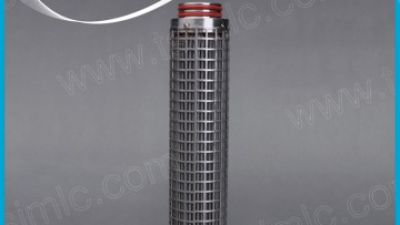
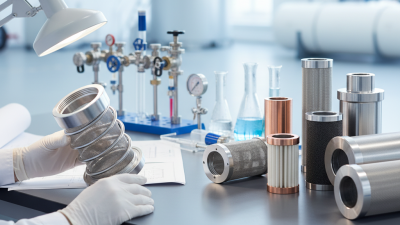
Stainless steel pleated filter cartridges combine durable metal media with a high-area M-shaped pleat design. Made from specialized stainless steel fiber felt and mesh, the cartridge is formed and secured by argon arc welding, providing excellent mechanical stability. It resists acids, alkalis, corrosion, high temperatures, and high pressures while maintaining low flow resistance and rapid filtration. Compared with sintered stainless steel filters, its pleated structure can deliver efficient purification and stable high-flow performance in demanding, continuous-duty environments.
These cartridges are suitable for high-pressure steam sterilization in pharmaceutical and food processing, precision pre-filtration of high-viscosity lubricating oils and resins, and fine removal of impurities from acidic or alkaline media in petrochemical operations. They can also support high-temperature corrosive gas treatment in metallurgy and high-pressure liquid purification in water treatment systems. When selecting a cartridge, consider the required filtration rating, flow rate, operating temperature, pressure differential, chemical compatibility, connection size, and housing dimensions. For viscous fluids, a larger filtration area can help reduce pressure loss and extend service intervals, while the appropriate stainless steel grade should be chosen according to the medium and cleaning method.
Start with a hydrophilic membrane. It wets quickly and supports stable flow. Check temperature, pressure, and required micron rating. A small pilot test still helps.
Choose materials with strong chemical resistance, often PTFE or compatible fluoropolymers. Confirm compatibility with the exact solvent, temperature, and pressure. General charts can mislead.
Process oil may be thick and warm. High viscosity can clog a capsule quickly and increase pressure loss. Compare flow, temperature, differential pressure, and service life.
No. Review flow rate, effective area, connector design, and sterilization method. A finer membrane may improve retention but shorten service life. Finer is not always better.
Depth capsules usually handle heavier particle loads before membrane filtration. Membrane capsules suit final clarification and microbial control. The correct combination depends on the fluid.
Check cleanability, traceability, low extractables, and material compatibility. Request certificates and lot information. Small paperwork gaps can delay production.
Review validated materials, sterile connections, microbial retention, and integrity-test results. Define acceptance limits before qualification. This step is easy to underestimate.
Record pressure at startup, midpoint, and batch end. Repeat this across several production cycles. Laboratory results may not match factory conditions. That gap deserves reflection.
Filter Capsules are compact, ready-to-use filtration units designed to remove particles, microorganisms, and other unwanted substances from liquids or gases. This overview explains how they operate and compares major capsule types available in 2026, including depth, membrane, pre-filter, and final-filter configurations. It also introduces common membrane materials and filtration ratings, helping buyers understand how pore size, retention performance, flow rate, pressure, and compatibility affect selection.
For global buyers, choosing the right Filter Capsules depends on the fluid, process conditions, and industry requirements, such as water treatment, food processing, laboratory work, and industrial manufacturing. The article also highlights key performance factors, including capacity, integrity, temperature resistance, chemical compatibility, and ease of installation. Finally, it covers international quality standards, protective packaging, labeling, documentation, shelf life, transportation, and supply planning, providing practical guidance for evaluating reliable filtration solutions across different markets.